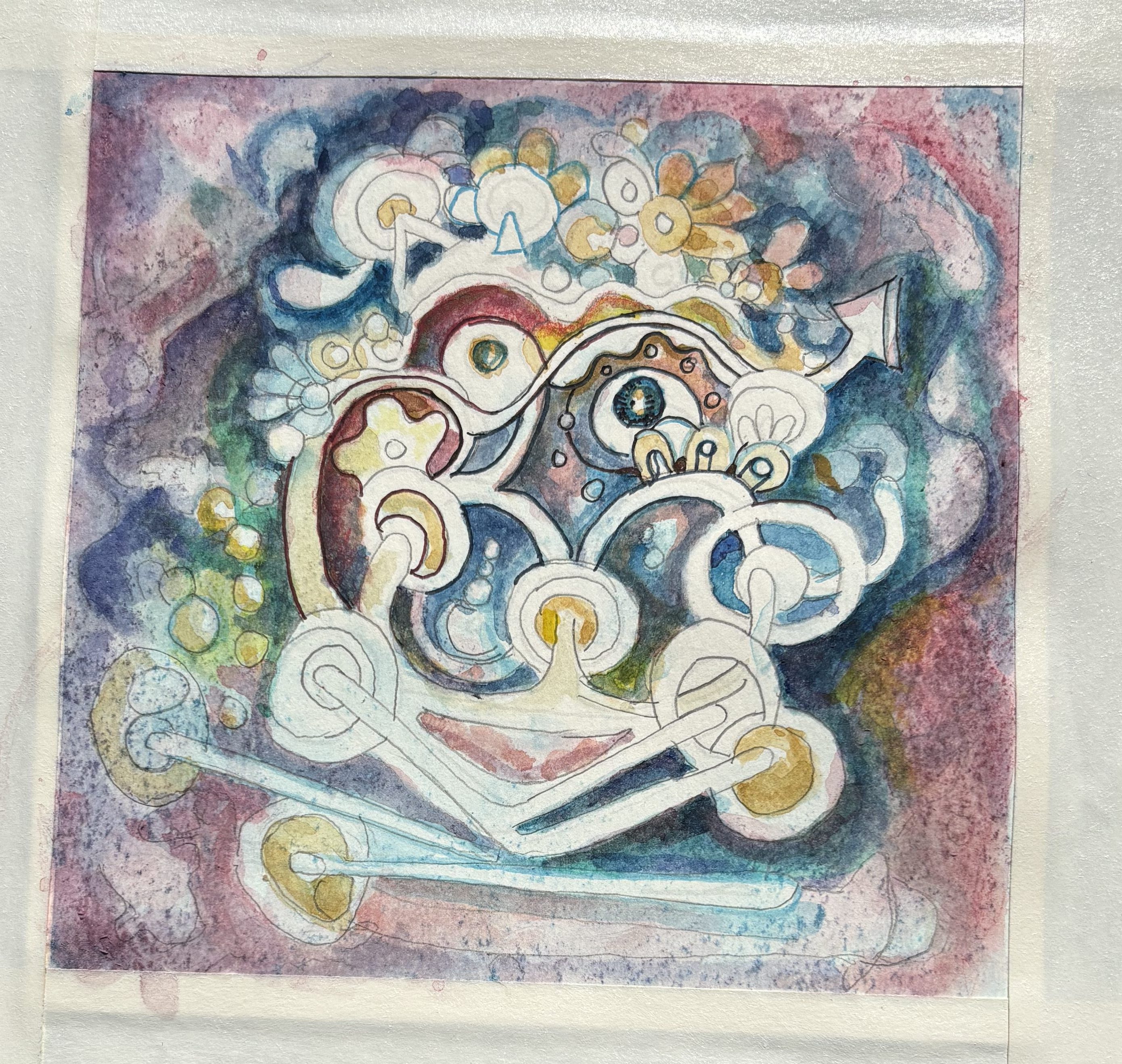
The Ordinary — a Pride Month group exhibition at Collective Z Gallery featuring works by participating artists.
“Being queer is ordinary. So is making good work.”
— Collective Z, The Ordinary exhibition statement
When Collective Z announced The Ordinary, I immediately understood why the title mattered.
For many of us, simply living our lives has too often been treated as something unusual, controversial, or in need of explanation. Yet most of life is made up of ordinary things: friendships, work, love, loss, community, and the hope of being seen for who we are.
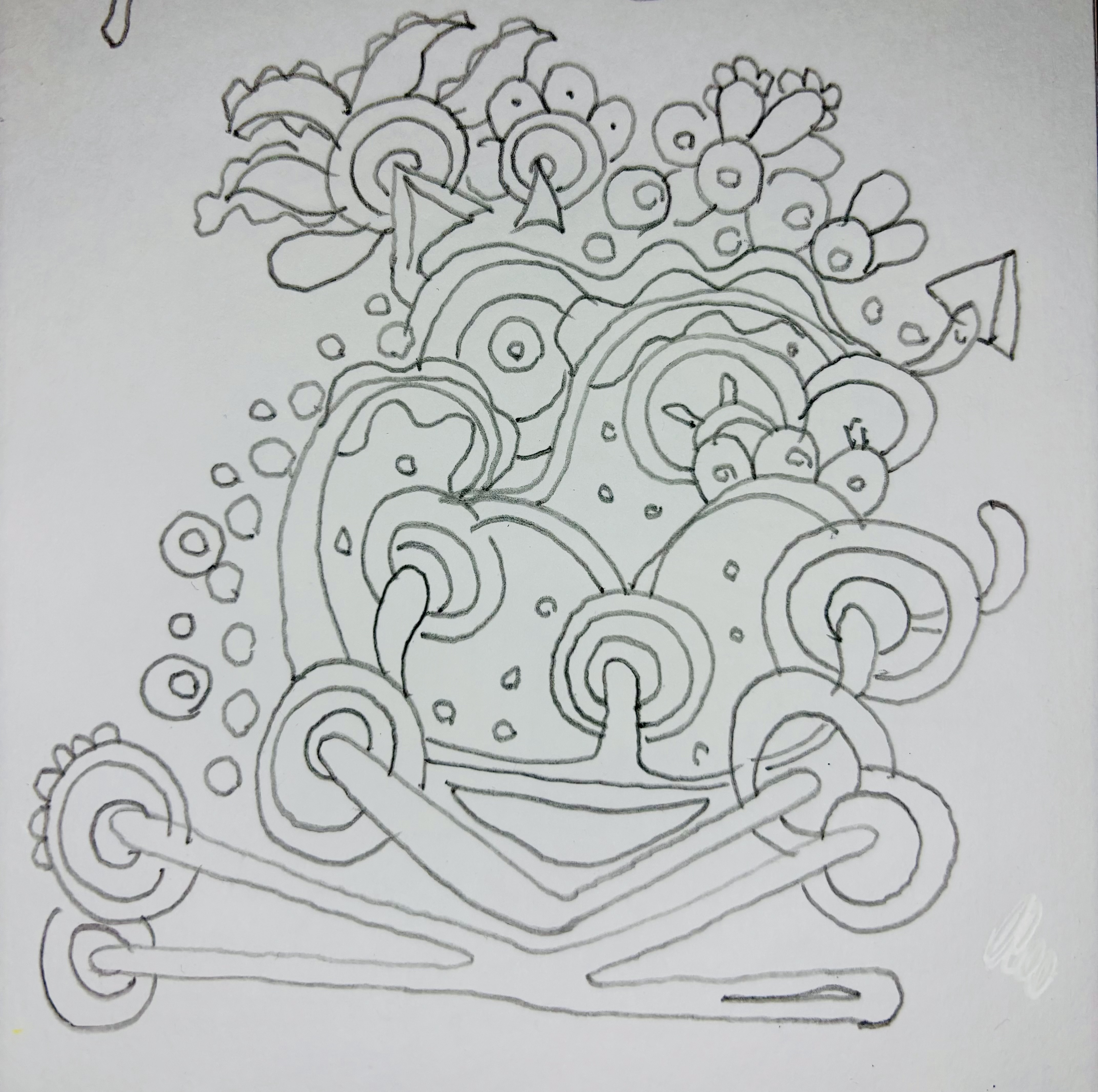
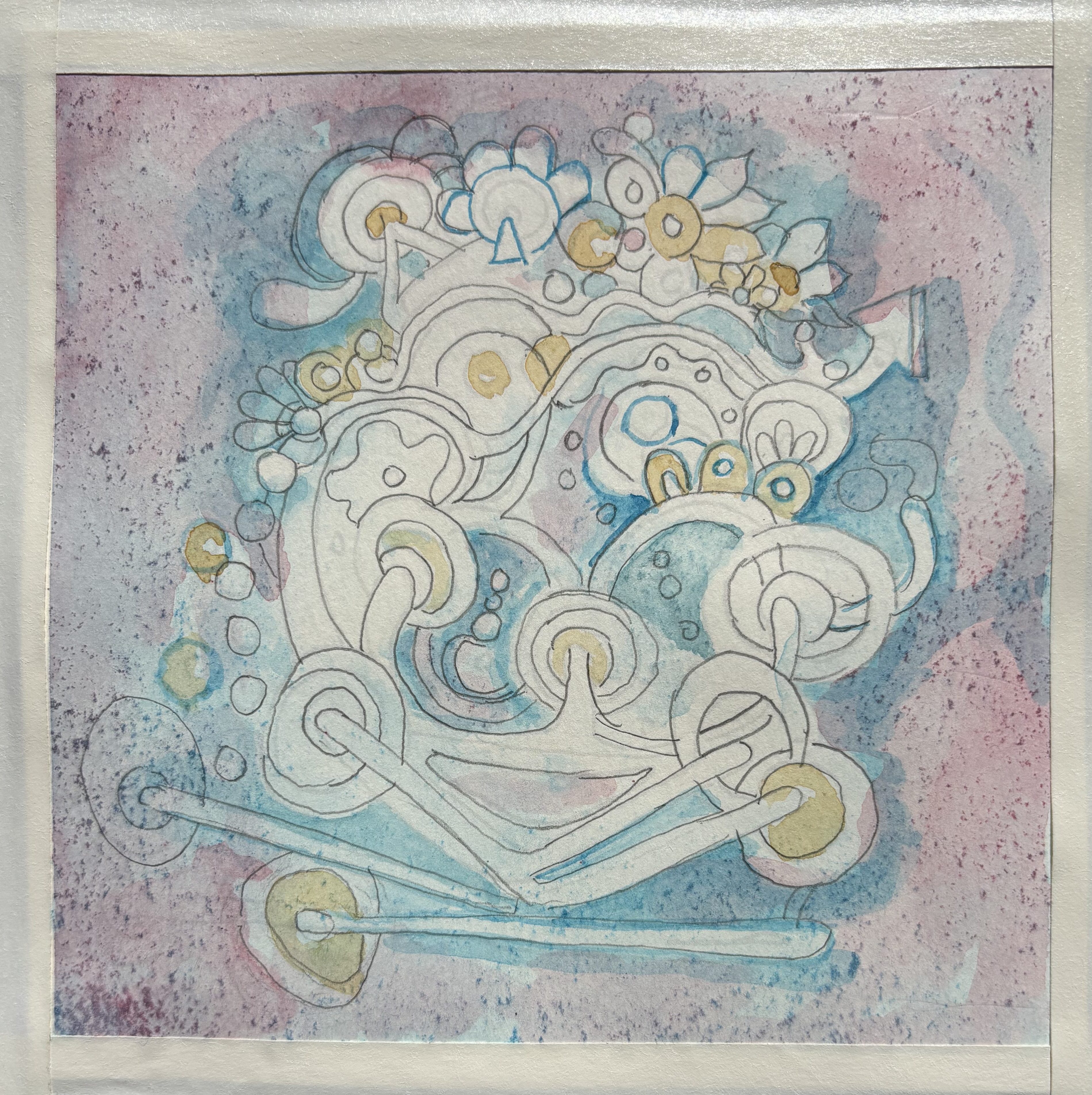
My piece Marsha P. is included in this exhibition. It began as a reflection on Marsha P. Johnson, but it also became a reminder of the people who came before us and the lives that made our own possible.
Sometimes the most important stories are not extraordinary at all. They are simply human.
I’m happy to share that my piece “Marsha P. (Johnson)” has been accepted into The Ordinary, a Pride Month group exhibition at Collective Z in New York City.
The exhibition opens June 4, 2026 and runs through June 30. Michael and I will leave this Thursday to attend the opening on June 4 and return to the Twin Cities on June 7.
What’s interesting to me is that this isn’t really the beginning of something entirely new. While walking today I found myself remembering another LGBTQ exhibition in New York years ago that accepted one of my postcard works — a shadow image of Frank Stark and me against a wall.
Funny how these threads continue across time, even when we forget them for a while.
And if you’ve followed this blog for a while, you’ve probably seen Marsha appear here before.
“Marsha P. (Johnson)” is a mixed media work on paper inspired by Marsha’s presence, courage, and visibility. Having the work included in a Pride exhibition in New York feels especially meaningful given her history and connection to the city.
While working on the piece, there were moments where it felt as though Marsha herself appeared to greet me through the process — much the way insights or leadings sometimes emerge through meditation.
Image description:
Mixed media artwork on paper honoring Marsha P. Johnson. The piece combines layered textures, expressive marks, and symbolic imagery to evoke presence, resilience, vulnerability, and visibility within LGBTQ history and community.
The ArtChangesLives(Dot)Com logo — a magenta high heel on cyan, representing who I am, the work I do, and the life I claim.
This stiletto mark represents ArtChangesLives(Dot)Com, but it also represents me. Its stiletto symbol meaning is deeply personal.
Growing Up Different
As a child, I loved crayons, paper, toy service stations, record players, cameras, and yes, even dolls. I was drawn to making, imagining, and worlds that did not always fit neatly into what was expected.
As I grew older, especially in my pre-teen years, I recognized more and more that I was the other, and I learned quickly that fitting in seemed safer than standing out.
But coming out changed that.
When the Stiletto Appeared
Years later, in graduate school, while working on a project about how shadows may have shaped my life, the image of a stiletto presented itself to me.
The original photograph — a shadow study from graduate school where the stiletto first appeared in my work.
What This Mark Means
The high heel is power, presence, and confidence. Sharp. Elegant. Strong. It takes up space without apology.
Cyan and magenta speak to identity, fluidity, courage, and becoming. They also carry the language of design, color, and creative life.
I am a gay man, and I have always known there is both masculine and feminine within me. I do not see that as conflict.
What I most admire is the strength of women—their resilience, grit, and what they endure. That strength shaped how I understand beauty, power, and identity.
So this mark is both banner and mirror.
It stands for the work.
And it stands for who I am.
Be who you are. Stand in it. Without apology.
For me, the stiletto symbol meaning is about identity, strength, and standing fully in who I am.
Sometimes a symbol chooses us before we understand why. Has that happened to you?
IMG_1712–What a Scandal-1980, Artist: Bill Hendricks (Shadowmason)
I made this drawing in 1980, just after I moved to New York City.
I was a kid from Minneapolis — recently out of college, a couple of years into working — and I had come to a quiet but unavoidable realization: staying where I was would mean living part of my life in a closet, or keeping parts of myself hidden. I decided to check out both Chicago and New York to see where I might land.
Chicago felt hard to me. New York felt open.
Within two weeks of arriving, I fell in love with the West Village. I went back to the Twin Cities only long enough to pack and was back in New York by Halloween. I found a roommate, found a job, lost a job, survived on unemployment — and like so many people before and after me, I found my community on Christopher Street.
This drawing came out of that moment.
I spent a lot of time at a small coffee shop called Kiss My Cookies. It was comfortable, cozy, and ahead of its time — cookies, brownies, coffee, small tables, and long conversations. I was there so often that Cy, the owner, offered me a job. I worked alongside Scott, Ralph, and Carlos, and two beat cops who stopped in regularly. Eventually, I wound up working at All State Art, a gallery just down the street.
Between the coffee shop, the gallery, and the block itself, Christopher Street became a cast of characters: Rollerena (sometimes called the Fairy Godmother), Marsha P. Johnson — often known as the saint of Christopher Street — along with actors, porn stars, artists, eccentrics, sweet misfits, a clown-college graduate, a lesbian manager, the joyful disaster of an owner’s brother, shopkeepers, cops, neighbors, and passersby. It was dysfunctional, funny, chaotic, kind, queer, deeply human.
This drawing isn’t meant to be a perfect architectural record. It’s an act of looking. The signs, the storefronts, the fire escapes, the rhythm of the street — all of it mattered to me. I was learning how to see a city not as a backdrop, but as a living system of people, labor, chance encounters, and survival.
When I look at it now, I sometimes think that stretch of Christopher Street was a sitcom waiting to be written. Not tragedy. Not trauma as the headline. Just life — community, chosen family, humor, tenderness, and endurance — long before anyone called it representation.
The paper has yellowed over time. I’ve chosen to leave it that way. It’s part of the object’s history, part of its truth.
“I am the maker of rules, dealing with fools.” — Eye in the Sky, Alan Parsons Project
Curious how the story begins with the last stroke of the pen or brush. As I look at the image — the strokes, shadows, and hues — something of the ’80s returns: the Saint, that holy spot. Dancing there with people I loved — accepting and greeting the universe. Death, hope, sorrow, play, joy, and the celebration of life — and a song: Eye in the Sky.
The line says “dealing with fools”…Nah. What circulates in my head is “protector of fools. I can read your mind.”