Finding Benton in Michelangelo

The Council Episode of the Battle of Cascina, painted by Bastiano da Sangallo after Michelangelo Buonarroti. A densely packed group of muscular male figures twist, gesture, and struggle in a dynamic battle scene derived from Michelangelo's lost Battle of Cascina cartoon.
Bastiano (Aristotle) da Sangallo (1481–1551), The Council Episode of the Battle of Cascina, after Michelangelo Buonarroti, 1542. This painting preserves part of Michelangelo’s lost composition for the unfinished Battle of Cascina
Thomas Hart Benton (1889–1975), Martha's Vineyard. Benton transformed the island landscape into a rhythmic composition of figures, movement, and place, reflecting his distinctive American Regionalist style.
Thomas Hart Benton (1889–1975), Martha’s Vineyard.

I was at the Raphael exhibition at the Metropolitan Museum of Art, and I was not expecting much after being at the Vatican and in Rome and seeing so many of Raphael’s works in person. However, the show at the Met was a real eye-opener.

Not only did it present the history and the images, but it also showed Raphael’s education and the many works he studied and used as references for his own work. Specifically, I was enamored by his drawings. The drawings had real life.

What I realized is that as he tightened the renderings, the life gradually faded away. I know I am not in any position to critique Raphael’s work, but that was one of the most amazing things I took from the exhibition.

The other surprise was finding an image created by an artist copying Michelangelo’s work. When I saw it, it reminded me so much of Thomas Hart Benton: the energy, the rhythm, even the lighting and shading.

It revealed to me that Benton, too, must have been deeply drawn to Michelangelo’s frescoes and to the undulating, muscular compositions Michelangelo favored.

One of the things I enjoy most about museums is that you never know what is going to stay with you. I went to see Raphael. I left thinking about Michelangelo, Thomas Hart Benton, and the ways artists borrow from one another across generations. Sometimes the most memorable part of an exhibition is not what you came to see, but the unexpected connection you discover along the way.


“The drawings crackle with nervous energy, which gradually attenuates as Raphael translates spontaneous insights into the cool, lacquered surface of painting.”
Financial Times

That observation captured exactly what I felt walking through the exhibition.


Fool on the Hill

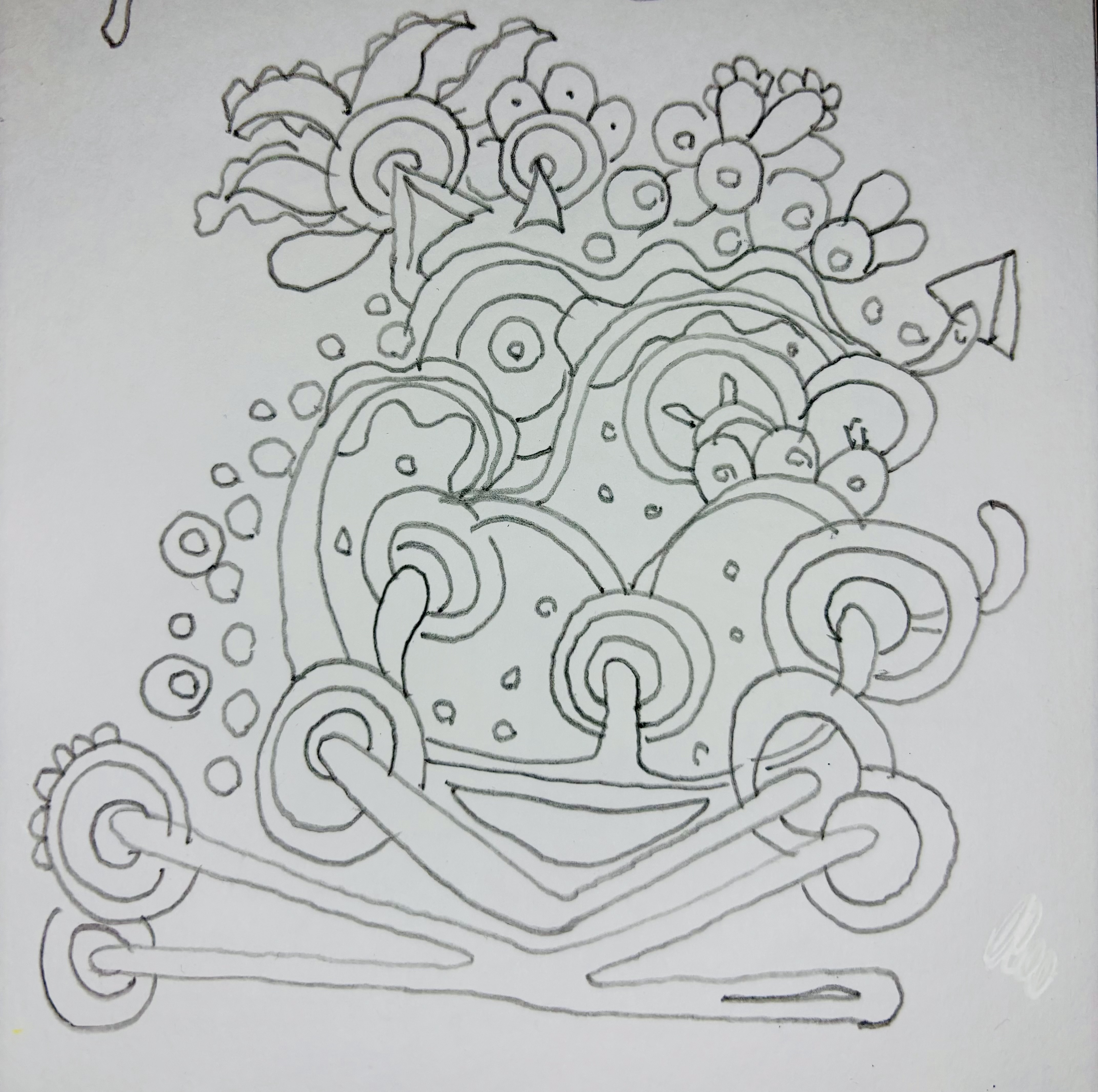
Abstract pen and ink drawing on paper with symbolic organic forms
Fool on the Hill — ink on Paper, 4 x 5in

— inspired by The Fool on the Hill, The Beatles

🌿 May 22, 2026 — Fool on the Hill

Today “The Fool on the Hill” popped into my head. When I was a kid, I identified with that song, and honestly, I still do.

What hit me today is that the song really isn’t from the fool’s perspective. It’s from the people watching him. Everybody deciding who he is from the outside.

And maybe that’s why it stayed with me.

Sometimes it’s not just feeling like the fool. It’s feeling seen as the fool.

A little outside things. Watching. Thinking. Maybe noticing things differently than other people do.

The song always felt lonely to me, but not completely sad. More like somebody trying to make peace with being different from the flow around them.


Still Working. Still Becoming.

Mapping Existence (2006), pen on paper, 12' × 12'. A large pen drawing tracing my shadow through an eight-hour day.
Mapping Existence (2005)
Pen on paper, 12′ × 12′
Tracing my shadow.

A drawing from 2005, one of a series called Mapping Existence

I’ve spent a lifetime around art — teaching it, designing it, selling it, and making it.

Funny thing: becoming a full-time artist later in life may be the hardest chapter yet.

Still working.

Still becoming.

Query

What keeps you doing what you’re doing?


Another map made years later, still wrestling with some of the same questions.


Presence Without Witness

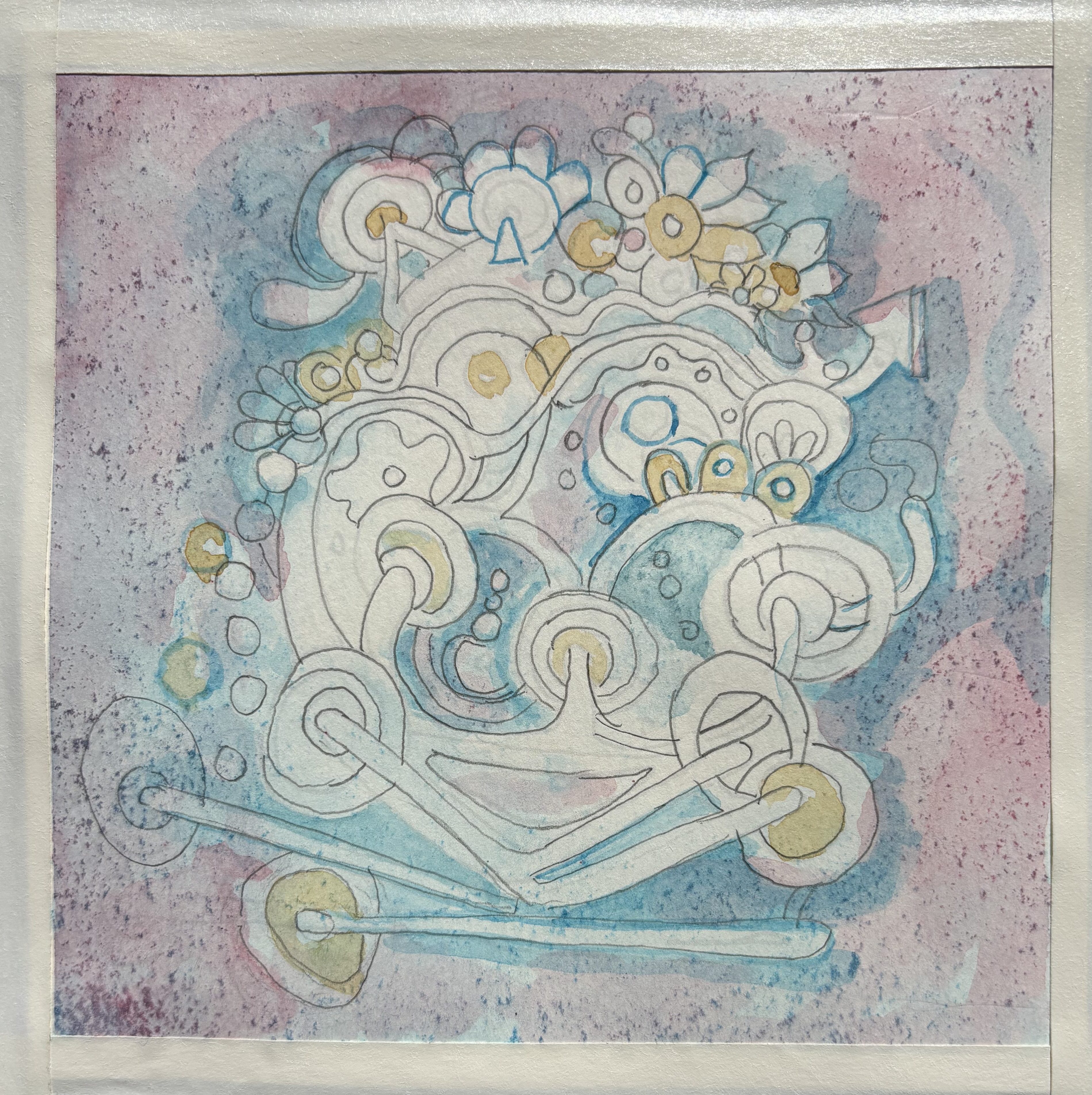
Abstract watercolor of a fragmented head with window-like compartments and circular mechanical forms, suggesting shadowed urban architecture.
Tenement-02172026-watercolor

Lately I’ve been thinking about what remains of us.

Not reputation.
Not a big story.
Not even the full face.

Just trace.

A shadow on concrete isn’t the person, but it proves something stood in the light.

I keep circling the idea that existence doesn’t require constant visibility. When awareness drops away — sleep, silence, the spaces between — there isn’t spectacle. There isn’t narrative. And yet something remains.

Maybe that’s what a shadow is.

Not the full reality.
Not the whole person.
Just proof that contact happened. That light met form.

Not monument.

Existence.

A human being is only breath and shadow.                                                           ~ Sophocles

Curious— how the story begins after the last stroke.

Eye in the Sky

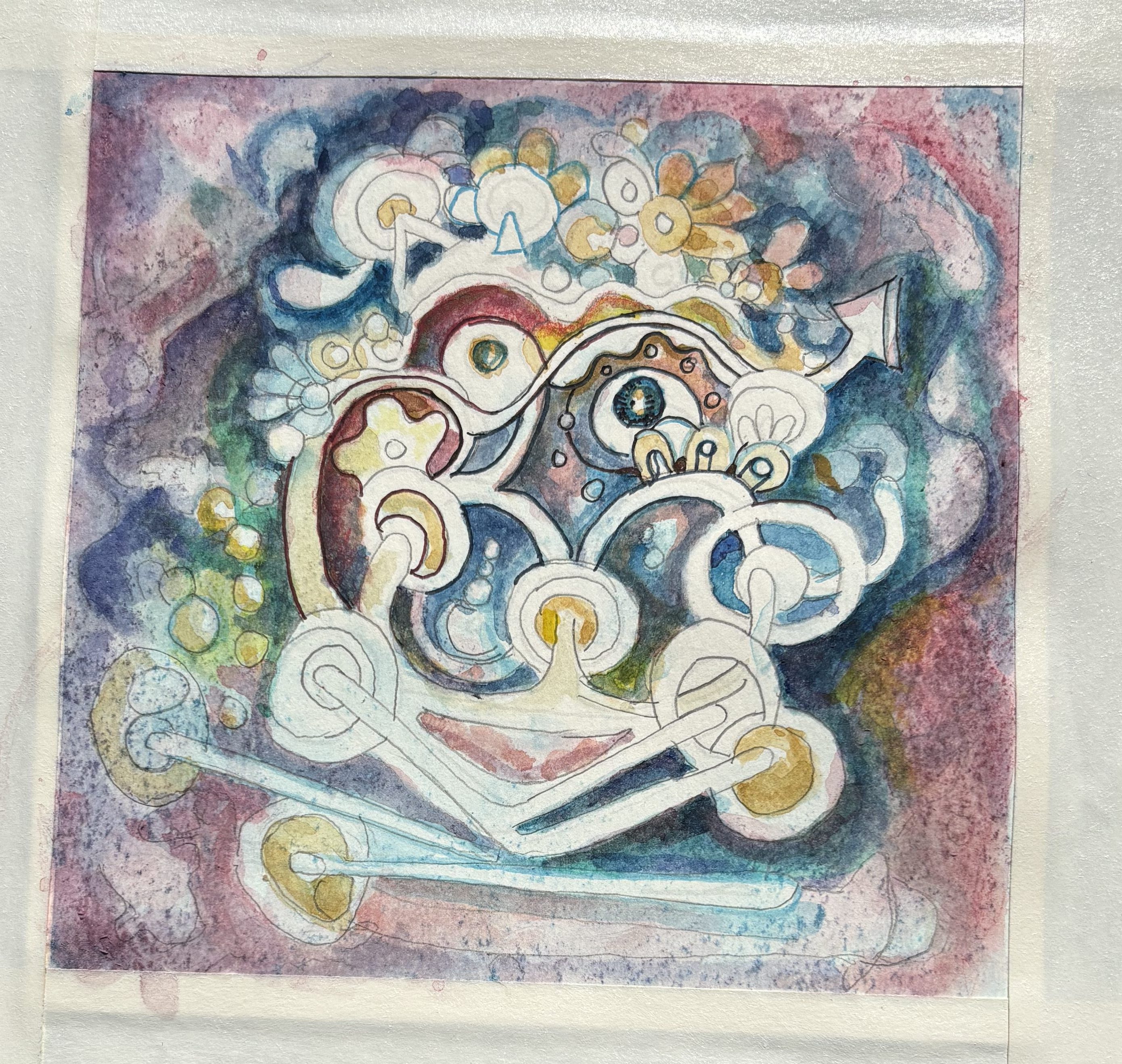
Abstract mixed-media work with layered color connecting to memories of 1980s NYC and The Saint, featuring a subtle blue eye form in the lower right.
Eye In Th eSky-12012026

“I am the maker of rules, dealing with fools.”
— Eye in the Sky, Alan Parsons Project

Curious how the story begins with the last stroke of the pen or brush. As I look at the image — the strokes, shadows, and hues — something of the ’80s returns: the Saint, that holy spot. Dancing there with people I loved — accepting and greeting the universe. Death, hope, sorrow, play, joy, and the celebration of life — and a song: Eye in the Sky.

The line says “dealing with fools”…Nah. What circulates in my head is “protector of fools. I can read your mind.”

Bill Hendricks (Shadowmason)

Song reference: Eye in the Sky — The Alan Parsons Project

Related post:
Surrealism, Automatic Drawing and the Spirit
— a reflection on creativity, memory, and the unseen.