Looking Back, Looking Forward: A Follow-Up to “Patterns Emerge”

Maps, patterns, and finding my way

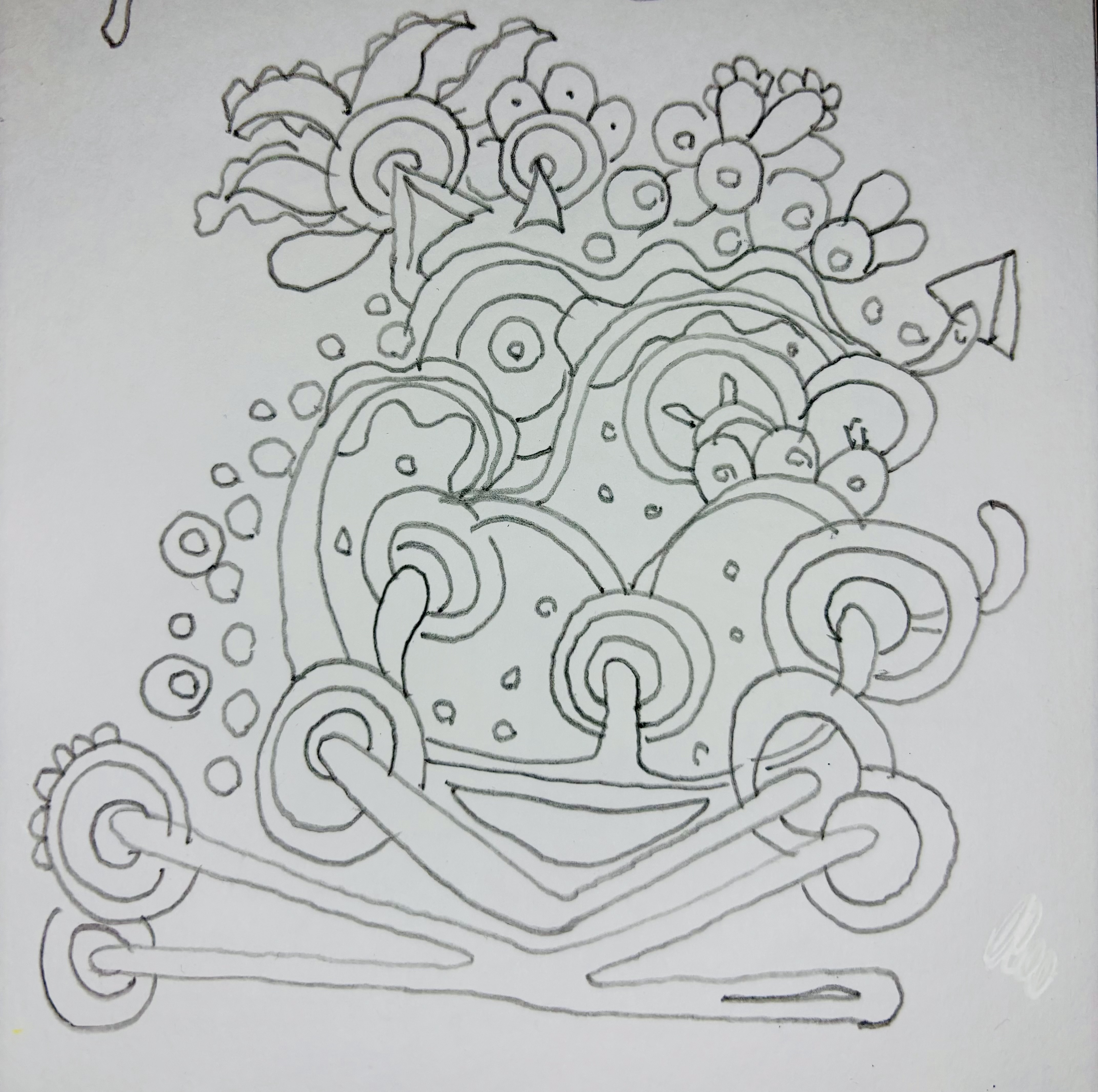
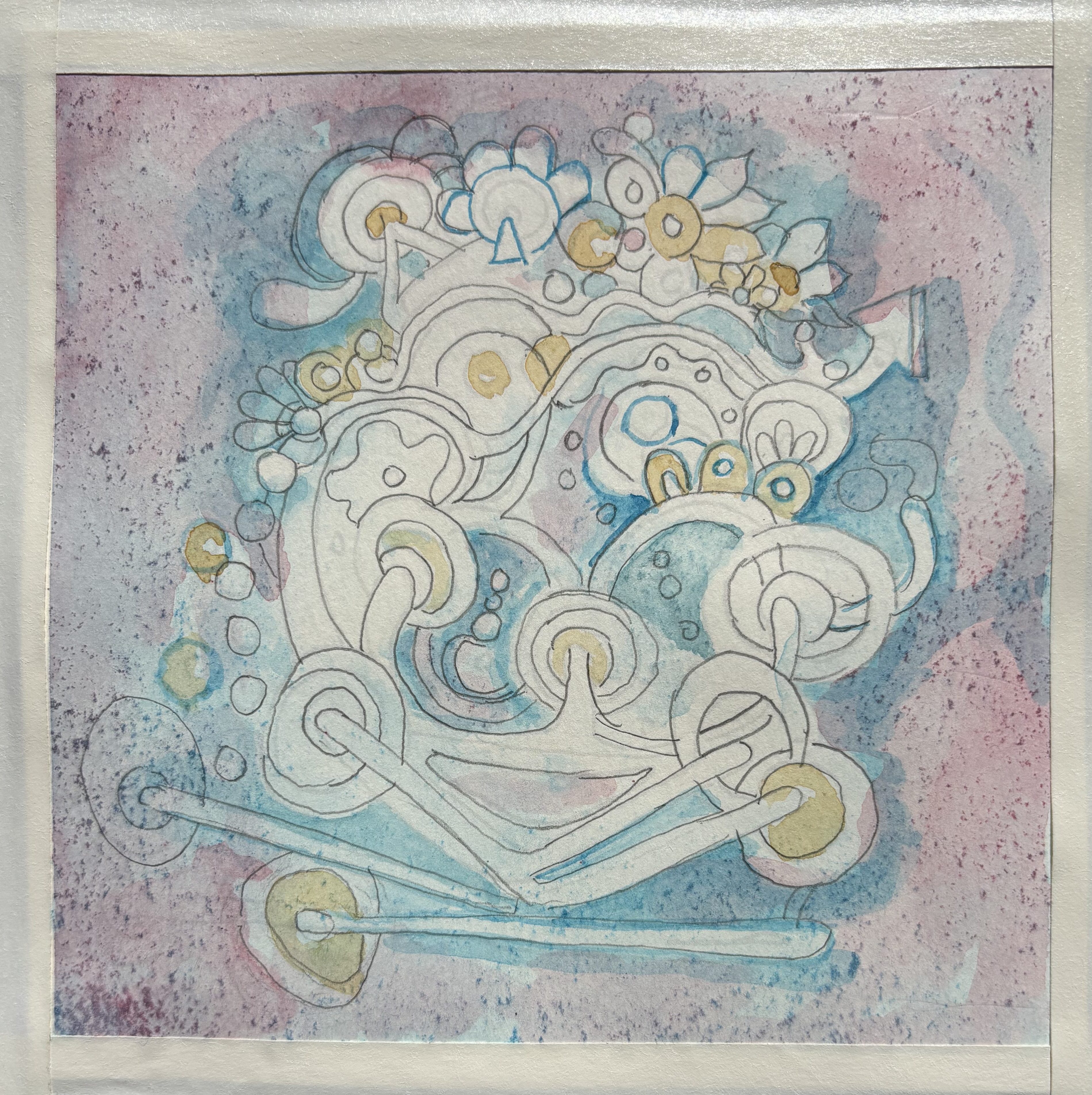
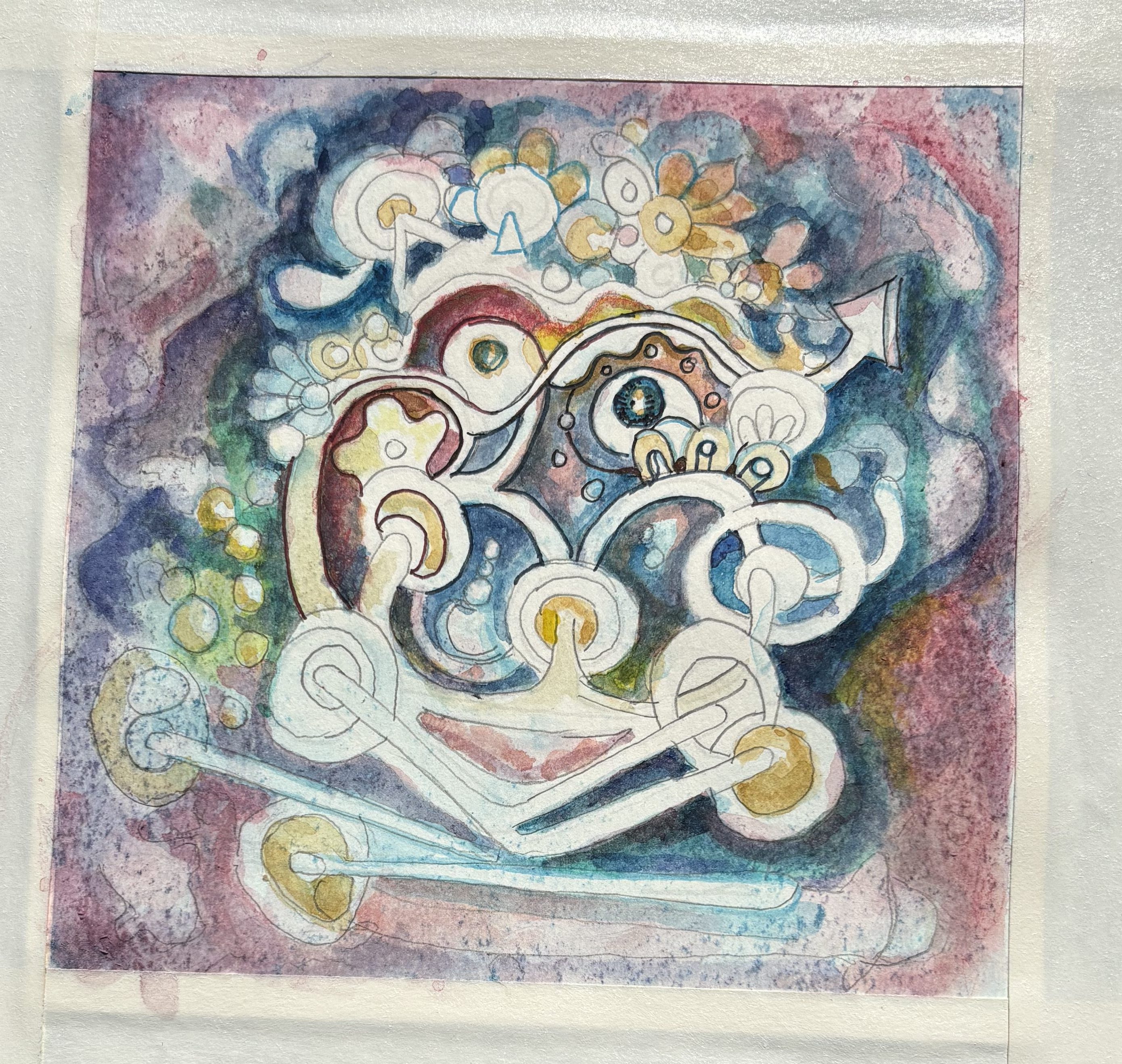
Mixed media drawing framed like a symbolic icon, featuring a stylized central form resembling a letter B or figure, directional arrows, geometric symbols, ribbon-like lines, and soft blue shading — suggesting identity, energy, and becoming.
Metaphysical Being — mixed media on paper, 2026.

Maps, patterns, and finding my way

Metaphysical Being — mixed media on paper, 2026.

Lately I’ve been thinking about how I got here.

I was born in 1953.

In 1969, I remember hearing about Stonewall late one night on KDWB radio. They were interviewing Jack Baker.

I was sixteen years old.

For the first time, I realized there were others. I wasn’t alone.

Looking back now, I realize that moment wasn’t just about being gay. It was the beginning of a lifelong search for direction—for understanding how people find their place in the world and how we make sense of lives that don’t always fit the expected path.

I’ve spent much of my life looking for paths.

Sometimes those paths appeared as maps. Sometimes as diagrams. Sometimes as outlines, websites, or decision trees. Often they appeared simply as ways of organizing what I could see—and finding relationships among things that did not, at first, seem connected.

As a teacher, I spent years making outlines, building websites, drawing wireframes, and thinking in mind maps. I taught Gestalt theory—the idea that our minds naturally seek relationships and organize visual information into meaningful wholes.

Being dyslexic, I think I was already doing that long before I knew there was a name for it.

I’ve often described myself as someone who sees patterns. And I still believe that’s true.

But during one of my daily walks, another thought quietly surfaced.

Maybe what has fascinated me all these years hasn’t been patterns themselves.

Maybe it’s been finding my way.

Patterns are useful because they reveal possible paths. Maps matter because they help us navigate. Even a labyrinth has a pattern—but its purpose isn’t the pattern itself. Its purpose is to help us travel and find ourselves.

That realization feels surprisingly important.

When I look back over my life—from hearing Jack Baker on the radio… to teaching students how we make sense of the world… to designing websites… to creating art… to exploring identity, community, and spirit—I don’t see disconnected experiences anymore.

I see one long journey.

The maps changed.

The questions changed.

The medium changed.

But the journey remained remarkably consistent.

Lately I’ve started calling some of my drawings Decision Trees.

At first I thought they were simply abstract compositions.

Now I wonder if they’re visual journals.

They resemble the maps, outlines, webs, and structures I have used throughout my life—not because I planned them that way, but because they’ve always been part of how I think.

As an artist, I don’t begin with answers.

I begin with curiosity.


Here’s a bit of what KDWB sounded like around that time:
KDWB—Channel 63, January 3, 1970.

Related post: This reflection continues the ideas I began exploring in Looking Back, Looking Forward, where I considered how patterns can help us find our way.

Looking Back, Looking Forward

Video: Looking Back, Looking Forward. A sequence of Bill Hendricks’s line drawings explores maps, branching paths, and emerging patterns. Music accompanies the images, along with a message.

Maps, patterns, and finding my way

During one of my daily walks, I realized something had been quietly growing over the past few weeks.

Looking back over my life, I see a thread I hadn’t fully recognized before.

As a teacher, I wasn’t really teaching maps. I was teaching how people think. Gestalt theory, visual relationships, organizing information, recognizing connections—those ideas found their way into almost everything I taught. Site maps, mind maps, color wheels, design systems… they were never just tools. They were ways of seeing.

Now I’m beginning to notice those same patterns emerging in my artwork.

The drawings began as what I called Decision Trees. Each branch suggested another possibility, another choice, another path.

But lately I’ve started wondering if they’re about something else.

Maybe they aren’t about making decisions.

Maybe they’re about recognizing patterns.

When life becomes uncertain, my instinct is to search for a new direction. Yet I’m beginning to wonder if the path is already there, waiting to be recognized. Perhaps finding our way isn’t about inventing something new. Perhaps it’s about noticing the connections that have been quietly leading us all along.

That thought has stayed with me.

It has even changed the way I look at these drawings. They no longer feel like illustrations of an idea. They feel like evidence of a conversation I’ve been having with myself without realizing it.

I don’t know exactly where this series is going.

That’s the exciting part.

For the first time in a while, I don’t feel like I’m forcing the work toward an answer. I’m simply paying attention to where it wants to lead.

Maybe that’s what artists do.

Maybe that’s what all of us do.

We keep looking back, not to live in the past, but to recognize the patterns that help us move forward.


“Humans are pattern-seeking, storytelling animals. We look for and find patterns in our world and in our lives.”

—Michael Shermer

Source: “Chicken Soup for the Evolutionist’s Soul,” MichaelShermer.com

Still Working. Still Becoming.

Mapping Existence (2006), pen on paper, 12' × 12'. A large pen drawing tracing my shadow through an eight-hour day.
Mapping Existence (2005)
Pen on paper, 12′ × 12′
Tracing my shadow.

A drawing from 2005, one of a series called Mapping Existence

I’ve spent a lifetime around art — teaching it, designing it, selling it, and making it.

Funny thing: becoming a full-time artist later in life may be the hardest chapter yet.

Still working.

Still becoming.

Query

What keeps you doing what you’re doing?


Another map made years later, still wrestling with some of the same questions.


Serious Play, Solemn Play

Abstract pen and ink drawing inspired by serious play vs solemn play, with flowing maze-like lines and a central vertical form exploring movement, balance, and the space between.
Pen and Ink | The Space Between — 5 × 5 in

Walking Reflection — April 17, 2026 Serious Play, Solemn Play

Years ago, I showed my students at Minneapolis College (MCTC) a video by Paula Scher on serious play vs. solemn play, and I find myself returning to that idea again.

“Serious play is about letting go and allowing things to happen. Solemn play is about controlling the outcome.” — Paula Scher

Years ago, I showed my students at Minneapolis College (MCTC) a video by Paula Scher on serious play vs. solemn play, and I find myself returning to that idea again.

At the time, I understood it pretty simply. Serious play felt open and exploratory, a place where not knowing was part of the process. Solemn play felt heavier, more controlled—something that closed things down.

But now I see it differently.

I think solemn play comes after serious play. Serious play is where things begin—where something opens, and I don’t quite know what I’m doing yet. But then something starts to form. A shape, a direction, a presence begins to emerge.

That’s where solemn play enters. It feels more like a kind of holding. A kind of listening. A willingness to stay with what’s emerging without trying to resolve it. It requires attention.

It’s almost like the kernel forms in serious play, but it begins to take root in solemn play.

Maybe the movement isn’t one or the other. It feels more like a quiet rhythm back and forth—between letting go and staying present, between discovery and care.

Where I am now isn’t about trying to get back to serious play.

It’s about learning how to remain in that space where something begins to take shape,

and then… the conversation begins.

Welcome to 2026

Being in the Now—
Even on a Scrap of Paper

A fun little line drawing filled with playful figures, floating shapes, and childlike celebration, capturing a sense of being present and in the moment.
A Place to Go While Staying Home—Bill Hendricks/Shadowmason

I’m starting the year with this little drawing simply because it makes me smile. I like the strange little world that showed up here — a figure with its arms thrown up like, “Okay, universe, let’s celebrate,” a Ferris-wheel-looking thing, balloons, suns, and those chunky little bug-stick people bobbing around, just enjoying and being present.

Nothing in this really makes sense, but it feels playful and relaxed. I love the variation in the lines and how loose it is. It’s not careful or perfect — it just… happened, while I let my hand wander. In its own quirky way, that feels like “living in the now”: not overthinking, not polishing, just letting something exist because it wants to.

I’m guessing that’s a pretty good way to walk into 2026.

“the Tate has a great resource on what play can mean in art”