Finding Benton in Michelangelo

The Council Episode of the Battle of Cascina, painted by Bastiano da Sangallo after Michelangelo Buonarroti. A densely packed group of muscular male figures twist, gesture, and struggle in a dynamic battle scene derived from Michelangelo's lost Battle of Cascina cartoon.
Bastiano (Aristotle) da Sangallo (1481–1551), The Council Episode of the Battle of Cascina, after Michelangelo Buonarroti, 1542. This painting preserves part of Michelangelo’s lost composition for the unfinished Battle of Cascina
Thomas Hart Benton (1889–1975), Martha's Vineyard. Benton transformed the island landscape into a rhythmic composition of figures, movement, and place, reflecting his distinctive American Regionalist style.
Thomas Hart Benton (1889–1975), Martha’s Vineyard.

I was at the Raphael exhibition at the Metropolitan Museum of Art, and I was not expecting much after being at the Vatican and in Rome and seeing so many of Raphael’s works in person. However, the show at the Met was a real eye-opener.

Not only did it present the history and the images, but it also showed Raphael’s education and the many works he studied and used as references for his own work. Specifically, I was enamored by his drawings. The drawings had real life.

What I realized is that as he tightened the renderings, the life gradually faded away. I know I am not in any position to critique Raphael’s work, but that was one of the most amazing things I took from the exhibition.

The other surprise was finding an image created by an artist copying Michelangelo’s work. When I saw it, it reminded me so much of Thomas Hart Benton: the energy, the rhythm, even the lighting and shading.

It revealed to me that Benton, too, must have been deeply drawn to Michelangelo’s frescoes and to the undulating, muscular compositions Michelangelo favored.

One of the things I enjoy most about museums is that you never know what is going to stay with you. I went to see Raphael. I left thinking about Michelangelo, Thomas Hart Benton, and the ways artists borrow from one another across generations. Sometimes the most memorable part of an exhibition is not what you came to see, but the unexpected connection you discover along the way.


“The drawings crackle with nervous energy, which gradually attenuates as Raphael translates spontaneous insights into the cool, lacquered surface of painting.”
Financial Times

That observation captured exactly what I felt walking through the exhibition.


Making Meaning

How do I map meaning before words arrive?

Abstract black-and-white drawing filled with symbolic marks, looping lines, geometric forms, arrows, and maze-like patterns exploring thought, language, and the process of making meaning.
Making Meaning — Opening a Sketchbook, 2026.

I think that’s it.

Finding my way in.

Then starting to move about the page. Finding another opening. Seeing a shift, a row, an arrow, a direction. Then each line takes shape and organizes itself, much like this drawing was created.

That’s how my brain functions.
That’s how I find meaning.

I’ve always seen relationships first — patterns, structures, connections between things.

This drawing feels connected to that.

It’s built on patterns, and the patterns shift from one system to another — repeating, evolving, reorganizing themselves across the page. In some ways, it reminds me of my Words I Cannot Read series on ArtChangesLives(Dot)Com — fragmented letterforms and systems that almost make sense, carrying meaning even before I fully understand them.

Eventually, the structure loosens, and at the top a small figure appears, waving, greeting, almost as if it has emerged from the system itself.

For me, these drawings are not illustrations after thought.

They are part of the thinking.


Still Working. Still Becoming.

Mapping Existence (2006), pen on paper, 12' × 12'. A large pen drawing tracing my shadow through an eight-hour day.
Mapping Existence (2005)
Pen on paper, 12′ × 12′
Tracing my shadow.

A drawing from 2005, one of a series called Mapping Existence

I’ve spent a lifetime around art — teaching it, designing it, selling it, and making it.

Funny thing: becoming a full-time artist later in life may be the hardest chapter yet.

Still working.

Still becoming.

Query

What keeps you doing what you’re doing?


Another map made years later, still wrestling with some of the same questions.


Why the Stiletto?

Magenta high heel logo on cyan background, representing ArtChangesLives(Dot)Com and Bill Hendricks’ brand identity.
The ArtChangesLives(Dot)Com logo — a magenta high heel on cyan, representing who I am, the work I do, and the life I claim.

This stiletto mark represents ArtChangesLives(Dot)Com, but it also represents me. Its stiletto symbol meaning is deeply personal.

Growing Up Different

As a child, I loved crayons, paper, toy service stations, record players, cameras, and yes, even dolls. I was drawn to making, imagining, and worlds that did not always fit neatly into what was expected.

As I grew older, especially in my pre-teen years, I recognized more and more that I was the other, and I learned quickly that fitting in seemed safer than standing out.

But coming out changed that.

When the Stiletto Appeared

Years later, in graduate school, while working on a project about how shadows may have shaped my life, the image of a stiletto presented itself to me.

Shadow of a high-heeled shoe cast against a wall, the original photograph that inspired the ArtChangesLives(Dot)Com stiletto symbol.
The original photograph — a shadow study from graduate school where the stiletto first appeared in my work.

What This Mark Means

The high heel is power, presence, and confidence. Sharp. Elegant. Strong. It takes up space without apology.

Cyan and magenta speak to identity, fluidity, courage, and becoming. They also carry the language of design, color, and creative life.

I am a gay man, and I have always known there is both masculine and feminine within me. I do not see that as conflict.

What I most admire is the strength of women—their resilience, grit, and what they endure. That strength shaped how I understand beauty, power, and identity.

So this mark is both banner and mirror.

It stands for the work.

And it stands for who I am.

Be who you are.
Stand in it.
Without apology.

For me, the stiletto symbol meaning is about identity, strength, and standing fully in who I am.

Sometimes a symbol chooses us before we understand why. Has that happened to you?

Serious Play, Solemn Play

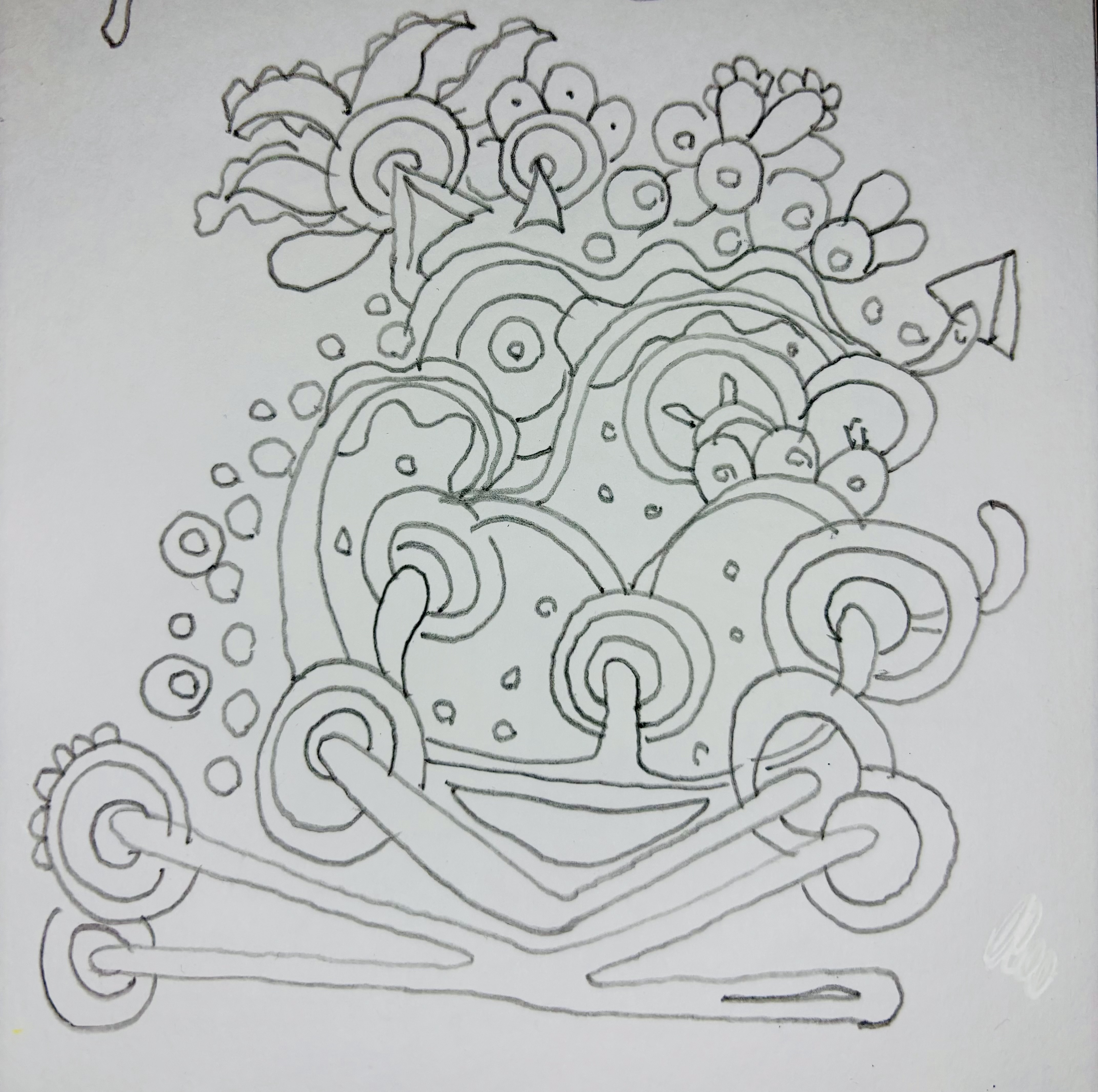
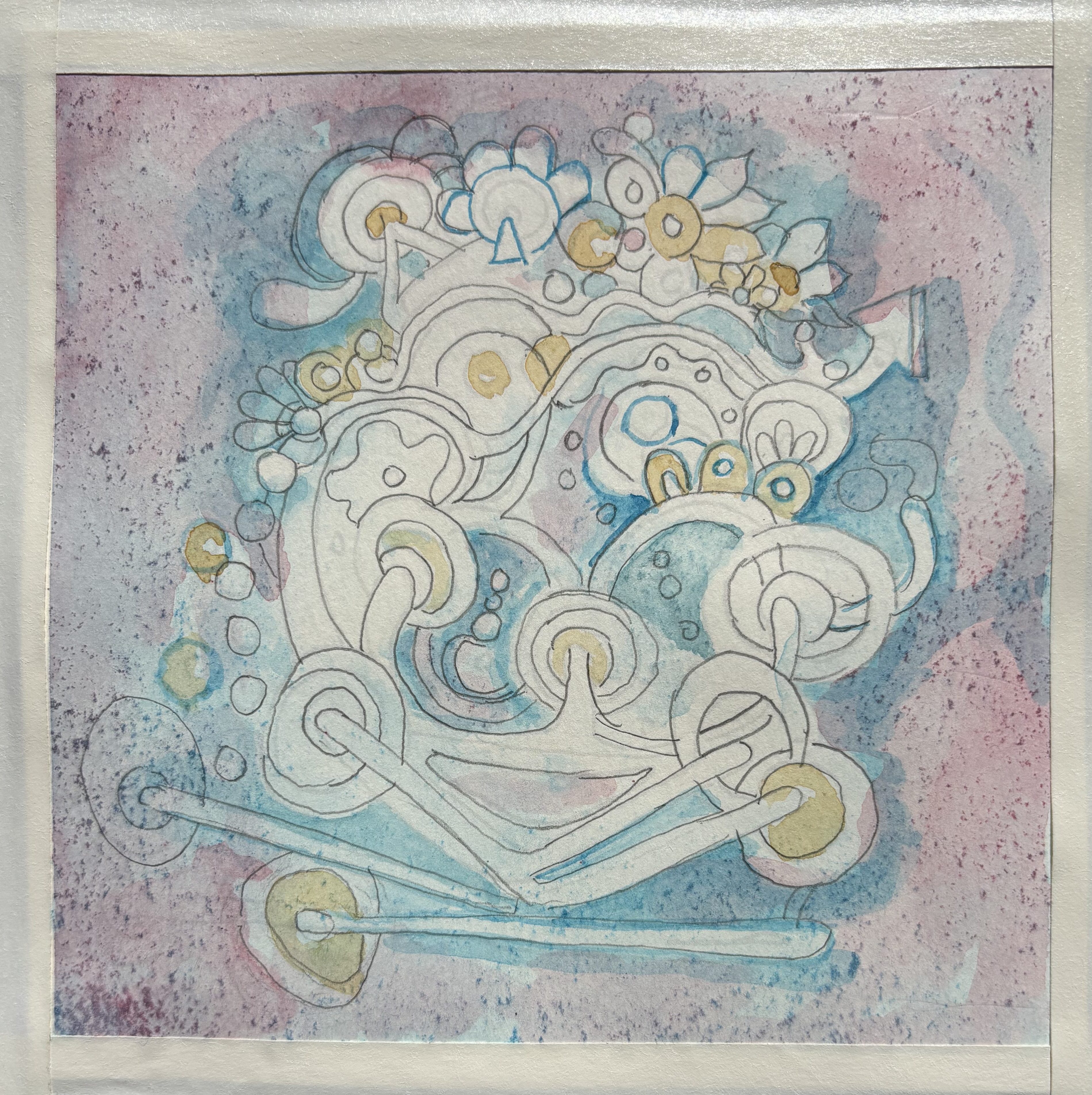
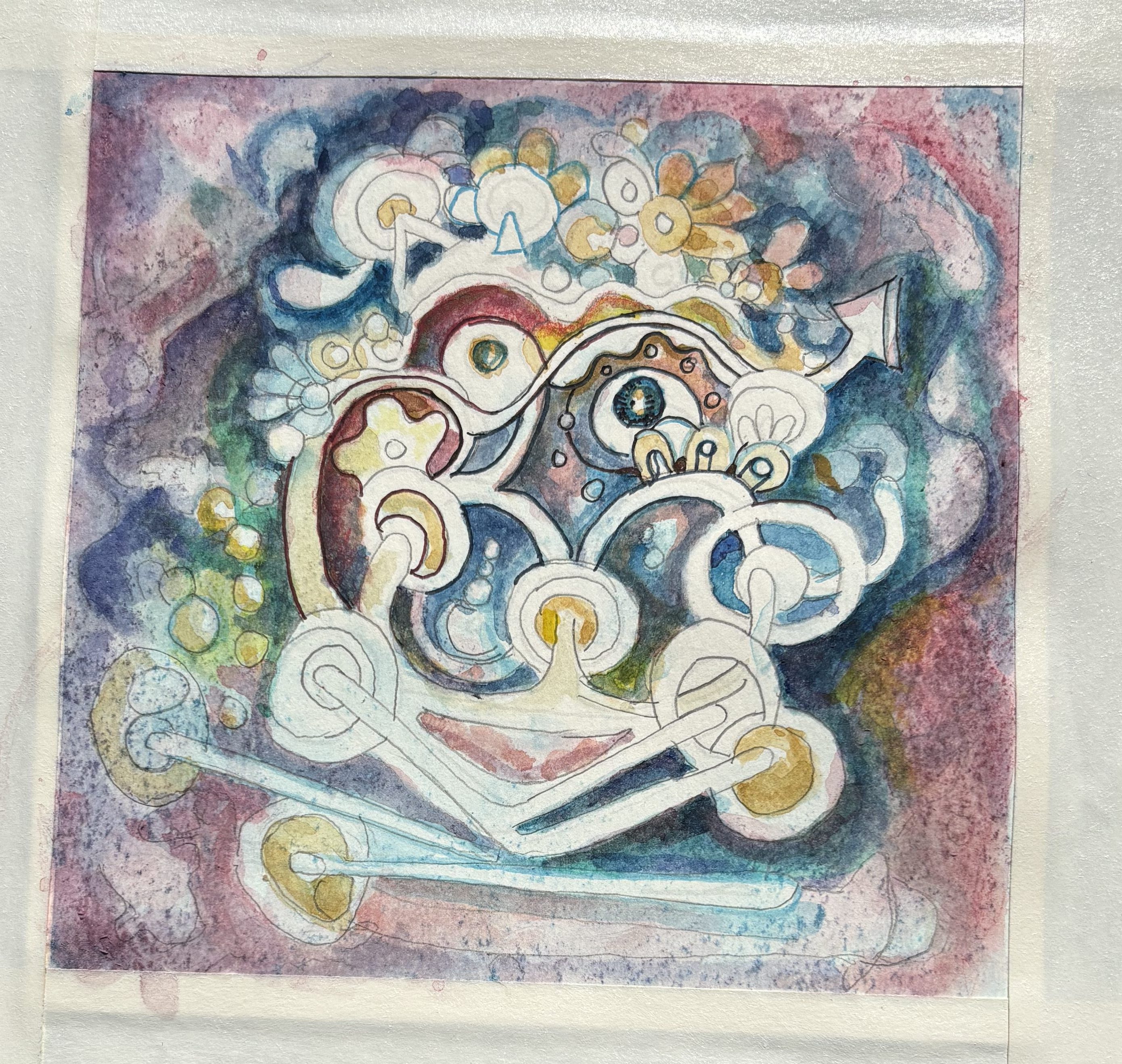
Abstract pen and ink drawing inspired by serious play vs solemn play, with flowing maze-like lines and a central vertical form exploring movement, balance, and the space between.
Pen and Ink | The Space Between — 5 × 5 in

Walking Reflection — April 17, 2026 Serious Play, Solemn Play

Years ago, I showed my students at Minneapolis College (MCTC) a video by Paula Scher on serious play vs. solemn play, and I find myself returning to that idea again.

“Serious play is about letting go and allowing things to happen. Solemn play is about controlling the outcome.” — Paula Scher

Years ago, I showed my students at Minneapolis College (MCTC) a video by Paula Scher on serious play vs. solemn play, and I find myself returning to that idea again.

At the time, I understood it pretty simply. Serious play felt open and exploratory, a place where not knowing was part of the process. Solemn play felt heavier, more controlled—something that closed things down.

But now I see it differently.

I think solemn play comes after serious play. Serious play is where things begin—where something opens, and I don’t quite know what I’m doing yet. But then something starts to form. A shape, a direction, a presence begins to emerge.

That’s where solemn play enters. It feels more like a kind of holding. A kind of listening. A willingness to stay with what’s emerging without trying to resolve it. It requires attention.

It’s almost like the kernel forms in serious play, but it begins to take root in solemn play.

Maybe the movement isn’t one or the other. It feels more like a quiet rhythm back and forth—between letting go and staying present, between discovery and care.

Where I am now isn’t about trying to get back to serious play.

It’s about learning how to remain in that space where something begins to take shape,

and then… the conversation begins.