Marsha P.: When the Past Becomes Present

I find myself reminiscing about the past more often these days.

I think about Christopher Street and the wonderful life that was lived there. I think about the friends I made, and the friends who became family, during one of the most intense periods in LGBTQ+ history—the AIDS epidemic.

So many of those friends are gone now.

But I still think about them. I remember them. And I think about the wonderful life I have had, and the life I am still having, and how much fun it would have been to share some of this life with them.

Maybe that has something to do with how Marsha P. came into being.
The drawing did not begin as Marsha P. Johnson.

I know that.

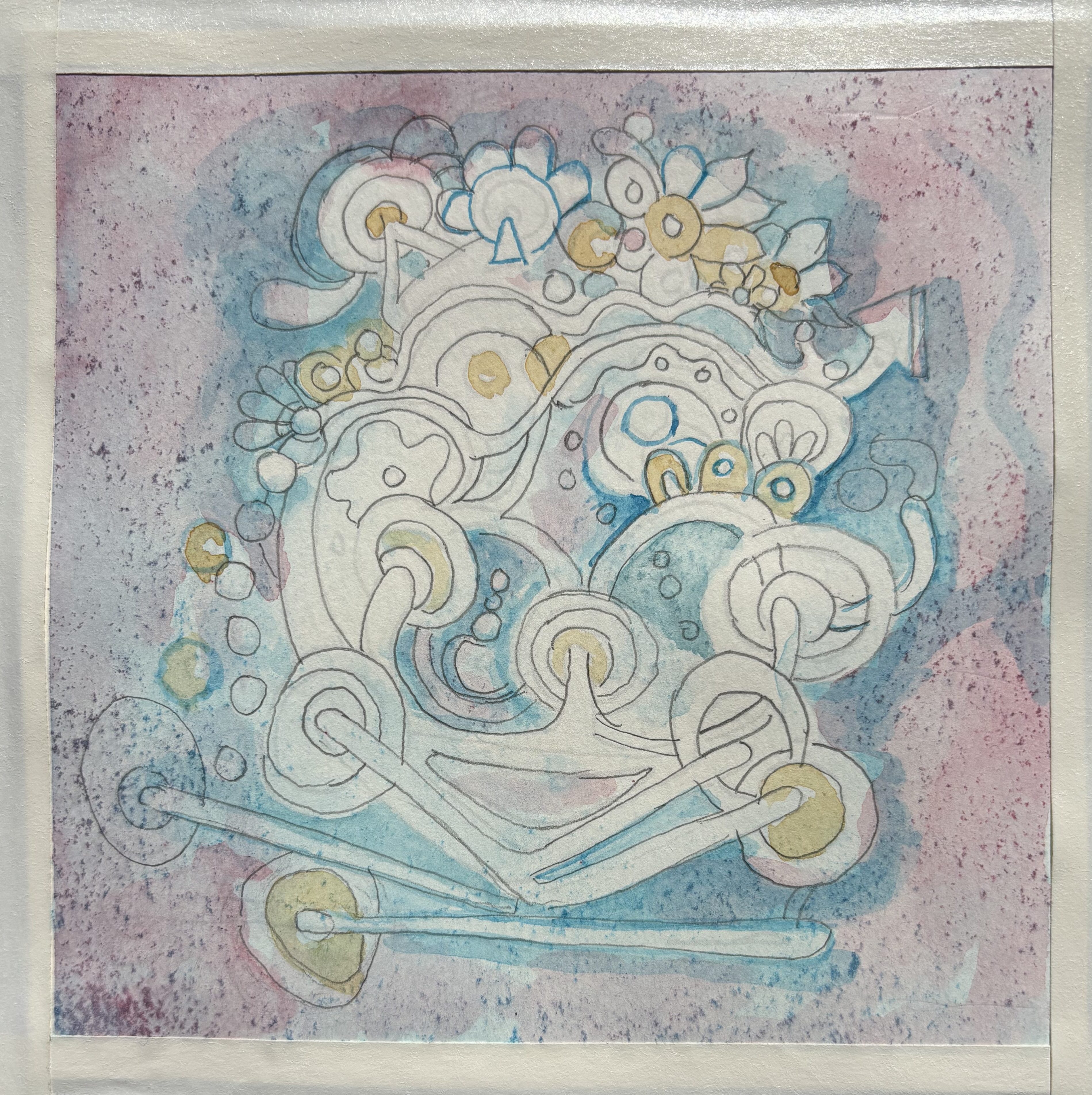
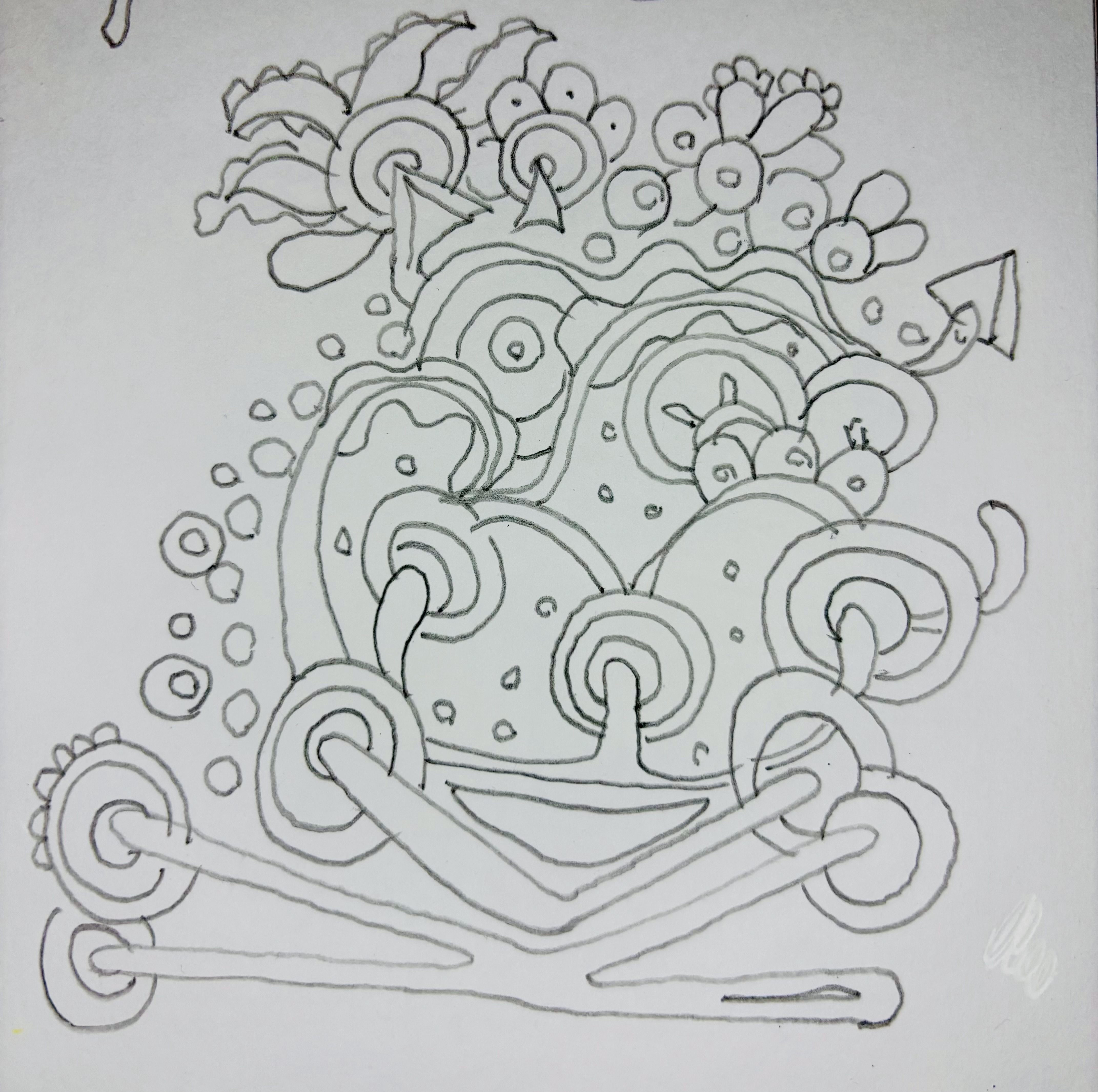
It began as a very abstract sort of image. I was working with shapes and lines without any intention of making a portrait.

Then I began to see something.

First I saw the smile.

At this point, I was exploring how to tint underneath the drawing—putting color down and then bringing areas back.

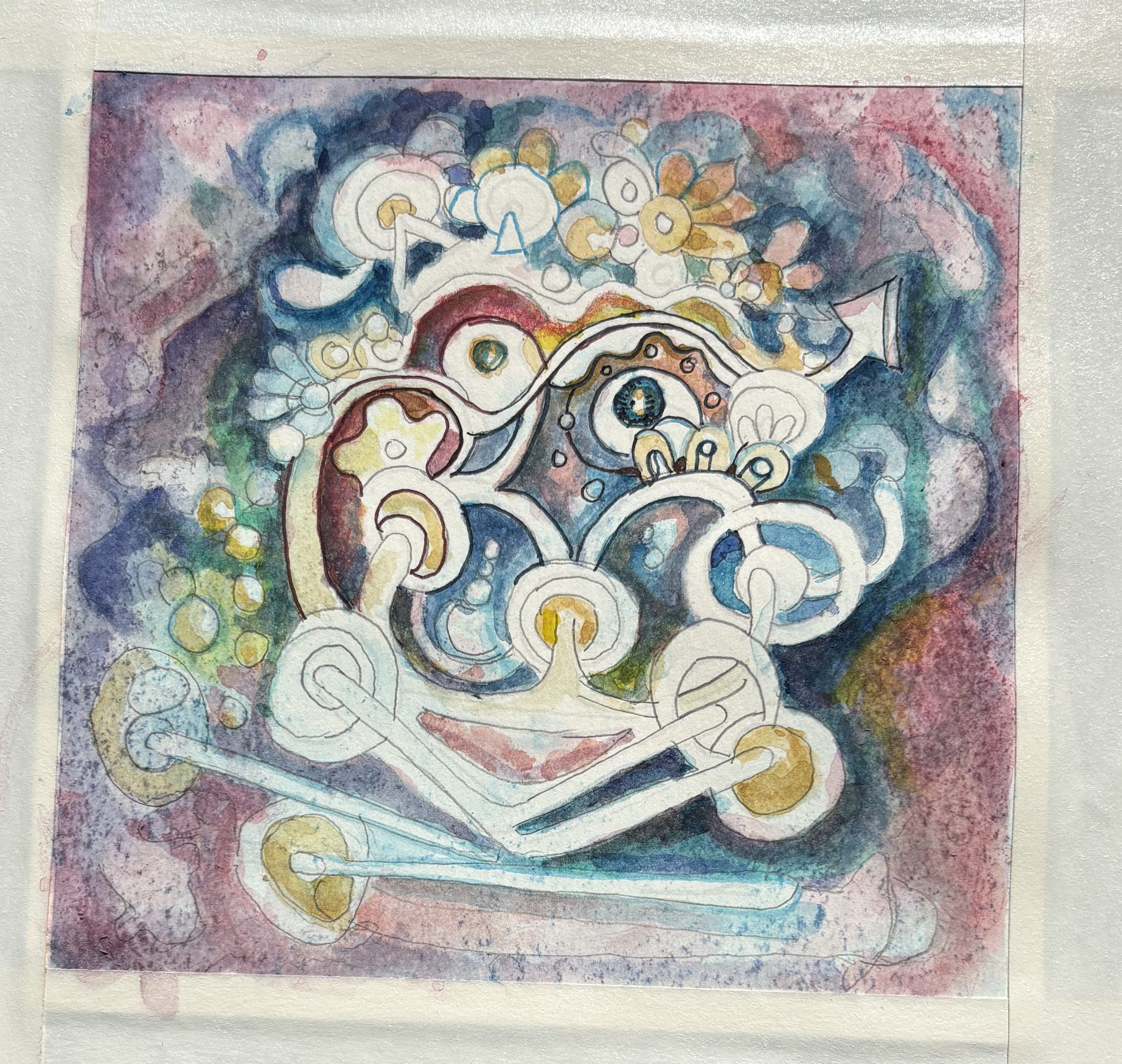
As I worked, I began to see the eyes.

And all along there was a certain joy in the drawing that kept coming through.

I continued drawing, painting, changing things, covering things, uncovering things. The more I worked, the more something from my own history seemed to be coming forward.

My past became present.

Marsha was part of the world I remember.

I don’t mean that Marsha and I were close friends. We weren’t.

She was someone who passed through my life.

But she was a character on Christopher Street, just as I was a character on Christopher Street—working in a gallery among lots of other characters I loved dearly.

There was something about seeing her emerge from this drawing that gave me a way of becoming involved with that world again.

Not simply remembering it.

Participating in it.

For a little while, the distance between then and now became smaller.

The finished work became Marsha P.

For me, it carries more than the image of one person. It carries something of Christopher Street, of friendship, of loss, of survival, and of the extraordinary joy that existed alongside some very difficult years.

Maybe that is why the joy in the drawing matters so much to me.

The work later traveled to New York, where it was exhibited during Pride Month. The original Marsha P. is now available through Collective Z Gallery on Artsy.

But when I look at it, that isn’t what I think about first.

I think about the people.

I think about the life we lived.

Sometimes, while making a drawing, the past finds its way back into the room.


Currently at Collective Z

Collective Z is currently presenting Second Nature, bringing together painters Gwen Yip and Spencer Patrick. Their work considers the spaces New Yorkers move through—from the public world of subway platforms to the private interiors where people retreat.

Second Nature is on view through August 29, 2026, at Collective Z, 325 Broome Street, New York.

Learn more about the exhibition.

Marsha P. Johnson, New York, and Old Threads

Expressive watercolor and ink painting with luminous circular and organic forms, honoring the resilience and spirit of Marsha P. Johnson.
Marsha P, watercolor and ink on paper, 2025

Accepted: The Ordinary — Collective Z, New York

I’m happy to share that my piece “Marsha P. (Johnson)” has been accepted into The Ordinary, a Pride Month group exhibition at Collective Z in New York City.

The exhibition opens June 4, 2026 and runs through June 30. Michael and I will leave this Thursday to attend the opening on June 4 and return to the Twin Cities on June 7.

What’s interesting to me is that this isn’t really the beginning of something entirely new. While walking today I found myself remembering another LGBTQ exhibition in New York years ago that accepted one of my postcard works — a shadow image of Frank Stark and me against a wall.

Funny how these threads continue across time, even when we forget them for a while.

And if you’ve followed this blog for a while, you’ve probably seen Marsha appear here before.

“Marsha P. (Johnson)” is a mixed media work on paper inspired by Marsha’s presence, courage, and visibility. Having the work included in a Pride exhibition in New York feels especially meaningful given her history and connection to the city.

While working on the piece, there were moments where it felt as though Marsha herself appeared to greet me through the process — much the way insights or leadings sometimes emerge through meditation.

Image description:
Mixed media artwork on paper honoring Marsha P. Johnson. The piece combines layered textures, expressive marks, and symbolic imagery to evoke presence, resilience, vulnerability, and visibility within LGBTQ history and community.


Why the Stiletto?

Magenta high heel logo on cyan background, representing ArtChangesLives(Dot)Com and Bill Hendricks’ brand identity.
The ArtChangesLives(Dot)Com logo — a magenta high heel on cyan, representing who I am, the work I do, and the life I claim.

This stiletto mark represents ArtChangesLives(Dot)Com, but it also represents me. Its stiletto symbol meaning is deeply personal.

Growing Up Different

As a child, I loved crayons, paper, toy service stations, record players, cameras, and yes, even dolls. I was drawn to making, imagining, and worlds that did not always fit neatly into what was expected.

As I grew older, especially in my pre-teen years, I recognized more and more that I was the other, and I learned quickly that fitting in seemed safer than standing out.

But coming out changed that.

When the Stiletto Appeared

Years later, in graduate school, while working on a project about how shadows may have shaped my life, the image of a stiletto presented itself to me.

Shadow of a high-heeled shoe cast against a wall, the original photograph that inspired the ArtChangesLives(Dot)Com stiletto symbol.
The original photograph — a shadow study from graduate school where the stiletto first appeared in my work.

What This Mark Means

The high heel is power, presence, and confidence. Sharp. Elegant. Strong. It takes up space without apology.

Cyan and magenta speak to identity, fluidity, courage, and becoming. They also carry the language of design, color, and creative life.

I am a gay man, and I have always known there is both masculine and feminine within me. I do not see that as conflict.

What I most admire is the strength of women—their resilience, grit, and what they endure. That strength shaped how I understand beauty, power, and identity.

So this mark is both banner and mirror.

It stands for the work.

And it stands for who I am.

Be who you are.
Stand in it.
Without apology.

For me, the stiletto symbol meaning is about identity, strength, and standing fully in who I am.

Sometimes a symbol chooses us before we understand why. Has that happened to you?

New York City Before AIDS

Christopher Street, a Lifetime Ago…

Black-and-white photo of Bill Hendricks outside All State Art on Christopher Street, NYC (1981/82), with a friend leaning in to kiss his cheek.

Richie and Bill outside All State Art, 81/82, Christopher Street, NYC

Bill Hendricks (81/82) giving Richie a peck on the cheek…

    • Before hashtags.
    • Before hindsight.
    • Before everything changed.

June 1–Can you imagine that?

Long shadows stretch across a tiled floor from unseen figures and window light, creating a quiet, haunting image suggestive of memory, absence, and presence.
Photo: One of my shadow pieces from grad school. Still poignant — Pride, AIDS, the 80s, the 90s. We are but shadows that linger.

This is an older shadow photography piece that I submitted for GLBT Pride 2006. A little dark, but it is one of my favorites. This last week I’ve been updating my online material. Perhaps I should be creating more art… but it is important to at least document a bit along the way. The information contained here may not be particularly insightful; it is only a gay man journaling some of his feelings in a very open forum. I am appreciative of life and all that it brings, but gratitude slips away now and then. That is sad.

I cannot believe how fortunate we are. Our lifestyle is beyond most of the world’s inhabitants’ imagination. I know my remaining time is short. I spend most of my time documenting the small things — the things one passes by without noticing. That is why you see so many shadows photographed in my work. What is more ignored than they are? What one might think of as totally benign is not. That is the point. That is the point of my art.

Vision, smell, and the rest of our senses are a miracle. Ick! Miracle — I really hate that word because it implies a God. Whether or not they are God-given is moot. That is not the point of the work. My work is about the ordinary. The ability to experience… to reason… is beyond what might be expected in this universe, and we get to. We get to. Pretty amazing.