I was walking today, thinking about how things have happened in my life. So much wasn’t planned. Things came along, I stepped into them, and before I knew it, I was doing it for better or worse.
Looking back, I’m amazed at how things worked out. But they weren’t always glory days. I didn’t always know where I was going or whether things would work out.
I kept doing it while making course corrections along the way. Now I’m spending more time thinking about what comes next, but I’m already doing what I want to do.
I’ve been noticing something similar in my drawings. Working with pen and ink makes me slow down. Every line matters. I have to look at what’s happening, think about what I’m doing, and decide where the next line goes.
It challenges me.
Maybe that’s why being present came to mind today. Whether I’m drawing or walking, there’s something about paying attention to what’s happening around me. I guess that is called presence.
I have confidence in sunshine,
I have confidence in rain.
I have confidence that spring will come again!
Besides which, you see, I have confidence in me!
When I was teaching, my students used to get a kick out of the fact that every once in a while I would break into song.
One of my favorites was I Have Confidence from The Sound of Music.
I’ve been thinking about that song lately. I’ve also been thinking about confidence, trust, and résumés.
A résumé can list what I’ve done. It can remind me of exhibitions, teaching, projects, and accomplishments. But confidence doesn’t come from a list of what I’ve already done.
It comes from trusting what I can do next.
I’ve been working on a new series of small drawings and paintings, and I’m pleased to say that some of them will be going to New York in December for Collective Z’s Small Works show.
I’m excited to be showing with Collective Z again. It’s a wonderful small gallery, and I’ve really enjoyed working with Alex Z. Wang.
Will every piece I make be the best piece I’ve ever made? Probably not.
That’s not really the point.
Whatever comes out of that process, it will be the best of me.
Bill Hendricks
Three works in progress from the Small Works series, 2026. Pen and ink on paper.
Collective Z is a contemporary gallery and project space on Broome Street in New York, dedicated to artists working in states of transition, tension, and becoming.
Pipe Fitters, 2026, Mixed media on paper, Bill Hendricks
Maybe it started with something I heard at Meeting this weekend about being slow to anger. The message was partly about animals and how uncomplicatedly they can love us. But my mind went somewhere else.
If you want to be loved, love.
If you want people to be kind to you, be kind.
If you want charity, show charity.
It sounds terribly simple. Maybe too simple. But I keep coming back to the idea that eventually it isn’t what we say about ourselves that matters. It’s how we behave.
Quakers don’t ask each other for résumés before we sit together in worship. We don’t list our accomplishments before standing to speak. At least we shouldn’t have to.
And yet I have a résumé.
I moved myself to New York when I was young and somehow built a life there. I finished my bachelor’s degree and figured out a way to do it for next to nothing. I ran a gallery in Midtown Manhattan and increased its sales. Later, Michael and I had our own business. Michael worked his tail off to help make it succeed.
Then HIV changed our lives.
We closed the business and moved back to Minnesota. Somehow, through that enormous transition, neither of us lost our medical insurance. That may not sound like much today, but at the time it was a feat.
I went back to work.
Eventually I found myself teaching full-time at Minneapolis College. I stayed for more than twenty years. I helped build a department. I earned my graduate degree while working another job to help pay for it.
Woo-hoo.
There. I gave you the résumé.
But none of that is really the point.
A résumé pulls together the pieces of a life. It’s simple Gestalt. You don’t see all the individual pieces anymore. You see the overall shape.
It makes a life look planned.
Mine wasn’t.
There were good decisions and bad ones. Things I worked hard for and things that happened almost by accident. Sometimes I succeeded. Sometimes I screwed up. Sometimes my own behavior probably made things harder than they needed to be.
That’s the life.
And maybe that brings me back to the message I heard at Meeting.
If you want love, love.
If you want kindness, be kind.
If you want charity, show charity.
Who I am isn’t my résumé.
Behavior tells that story.
In the end, which matters more—the résumé or how you live your life?
“I paint because the spirits whisper madly inside my head.” —Attributed to El Greco
Remembering the Christopher Street That Held a Community
August 28, 2026
The distance between Lake Harriet and Christopher Street is more than a thousand miles, but memory has a way of collapsing distance without warning.
Not so much about individual people this time, but about the set. That’s what it felt like as I started putting the pieces back together.
There was Allstate Art, where I worked. Kiss My Cookies. Hercules on the corner. The loft a couple doors down. Boots and Saddles. Clyde’s. A Clean Well-Lighted Place, a lovely little gallery.
There was Richard White’s jewelry store. I remember Richard and his lover sitting behind the counters, working side by side. It was a dark little place, nothing flashy.
At Bleecker and Christopher was an Asian fruit stand. There was Paul Bolardo’s place further down Christopher. Across from Kiss My Cookies was a little photography store in a basement.
Then there was the food. Chicken from Jefferson Market for dinner. Turkey legs from the deli. Zito’s Bakery. And Rocco’s, where my favorite was the creamolata. Wonderful.
There were lots of other places, of course. These are simply the ones that stayed with me.
Together they made up this little world where we worked, ate, went out, saw friends and ran into people we knew.
It was a community, but today I was remembering the place that held the community.
And somewhere in the background was Sylvester singing “You Make Me Feel (Mighty Real),” probably drifting out of Boots and Saddles—also known as Bras and Girdles.
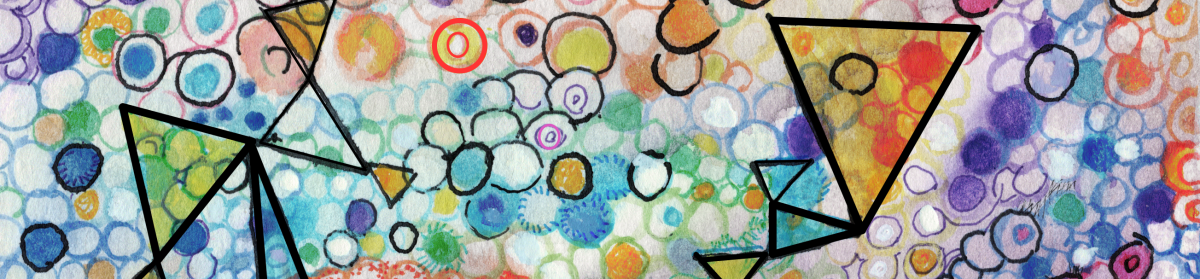
The drawing here isn’t Christopher Street. But somehow it feels right with these thoughts—pieces connected to pieces, the way memory sometimes works.
Today, for a little while, I could see the set again.
I wonder what part of it I’ll remember next.
— Bill Hendricks
Continue the conversation
For more photographs, stories, and memories of Christopher Street, visit this Facebook group.
In 1969, I remember hearing about Stonewall late one night on KDWB radio. They were interviewing Jack Baker.
I was sixteen years old.
For the first time, I realized there were others. I wasn’t alone.
Looking back now, I realize that moment wasn’t just about being gay. It was the beginning of a lifelong search for direction—for understanding how people find their place in the world and how we make sense of lives that don’t always fit the expected path.
I’ve spent much of my life looking for paths.
Sometimes those paths appeared as maps. Sometimes as diagrams. Sometimes as outlines, websites, or decision trees. Often they appeared simply as ways of organizing what I could see—and finding relationships among things that did not, at first, seem connected.
As a teacher, I spent years making outlines, building websites, drawing wireframes, and thinking in mind maps. I taught Gestalt theory—the idea that our minds naturally seek relationships and organize visual information into meaningful wholes.
Being dyslexic, I think I was already doing that long before I knew there was a name for it.
I’ve often described myself as someone who sees patterns. And I still believe that’s true.
But during one of my daily walks, another thought quietly surfaced.
Maybe what has fascinated me all these years hasn’t been patterns themselves.
Maybe it’s been finding my way.
Patterns are useful because they reveal possible paths. Maps matter because they help us navigate. Even a labyrinth has a pattern—but its purpose isn’t the pattern itself. Its purpose is to help us travel and find ourselves.
That realization feels surprisingly important.
When I look back over my life—from hearing Jack Baker on the radio… to teaching students how we make sense of the world… to designing websites… to creating art… to exploring identity, community, and spirit—I don’t see disconnected experiences anymore.
I see one long journey.
The maps changed.
The questions changed.
The medium changed.
But the journey remained remarkably consistent.
Lately I’ve started calling some of my drawings Decision Trees.
At first I thought they were simply abstract compositions.
Now I wonder if they’re visual journals.
They resemble the maps, outlines, webs, and structures I have used throughout my life—not because I planned them that way, but because they’ve always been part of how I think.
Related post: This reflection continues the ideas I began exploring in Looking Back, Looking Forward, where I considered how patterns can help us find our way.