Art Re-Education Revisited

I’ve been thinking about that phrase.

A few years ago, while attending Friends General Conference, I took a Zentangle workshop. Part of my interest was practical. As a teacher, I was always looking for things I could bring back to my students. At the same time, I was doing some spiritual searching of my own.

When I retired, my intention was simple. I thought I would return to the work I had left behind years earlier when I completed my MFA. While teaching, my focus had been on technology, my students, and teaching itself. I assumed I would pick up where my thesis left off and continue from there.

I did return to my thesis and to its central ideas: how perception and physiology affect our vision of reality.

What I discovered, however, was that too much had changed. The media I was working with had changed. My interests had changed. Instead of continuing where I left off, I found myself asking some of the same questions I had wrestled with in graduate school.

What is my art about?

What am I trying to say?

And what medium is best suited to saying it?

At some point, I began to wonder if I was engaged in a kind of re-education.

Looking back at those early pieces now, I can see that many of them focused on value, texture, repetition, and mark-making. At the time, I didn’t really realize what I was exploring, but now they feel a bit like exercises in learning how to see and do again. To me, that’s my art re-education.

What I do know is that one thing kept leading to another.

A drawing would spark an idea for the next drawing, and little by little my curiosity carried me beyond the boundaries of Zentangle itself. Questions about line and pattern turned into questions about color, surface, and different ways to make marks.

Before I knew it, ink led to watercolor, watercolor led to gouache, gouache led to colored pencil, digital work, and eventually oil paint.

The recent exhibition at Collective Z feels like a milestone along that path. With the show entering its final week, I’ve found myself taking a breath and wondering what comes next.

And perhaps that’s the point: I’m still asking questions.

I’m not sure where the path leads from here, but I’m still eager to follow it.


“Art does not reproduce what we see. It makes us see.”

— Paul Klee

Walking Reflections — November 8

From the Set Aside Box

An abstract watercolor in blue, black, and yellow tones — architectural forms intersect like machinery and skyline, both mechanical and human.Caption: An image once set aside — rediscovered as part of a continuing conversation.
An old image — part of a new dialogue.

A few days ago, I watched the video linked above, “3IATLAS Just Revealed Unbelievable Photos That Shocked NASA and Harvard | Michio Kaku.” On my walk today, this image came to mind, and I felt there was a connection.

A bit dystopian — one AI-generated and mine not — but they both share a feeling.
One states it; one you have to interpret.

The strongest statement in the video was this: “They said we failed the evaluation. The evaluation period is now done. We were filed away.”

Dark, I know. But I think — not doomed.

Bill Hendricks
https://artchangeslives.com/tag/ephemeral-traces/

The Small Potato Manifesto—May not Read but I Identify

Book cover, for a book titled Creative Not Famous, The Small Potato Manifesto
Potato Manifesto, Author Ayun Halliday

I’ve got this theory that the giant majority—like 99.9% of all humans toiling creatively—are small potatoes. We’ll never be rich. We’ll never be famous … nowhere near as famous as we should be. Yet, we struggle on, undeterred that most of the world considers us to be small potatoes … if they consider us at all.
       ~ Ayun Halliday’s, Creative, Not Famous: The Small Potato Manifesto

Keep on Truckin' an image inspired bya song by The Temptations 1973
Keep on Truckin’. It’s an image inspired by a song with the same title.

I guess we “Keep On Truckin’.


Dyslexia is not a disability – it’s a gift.

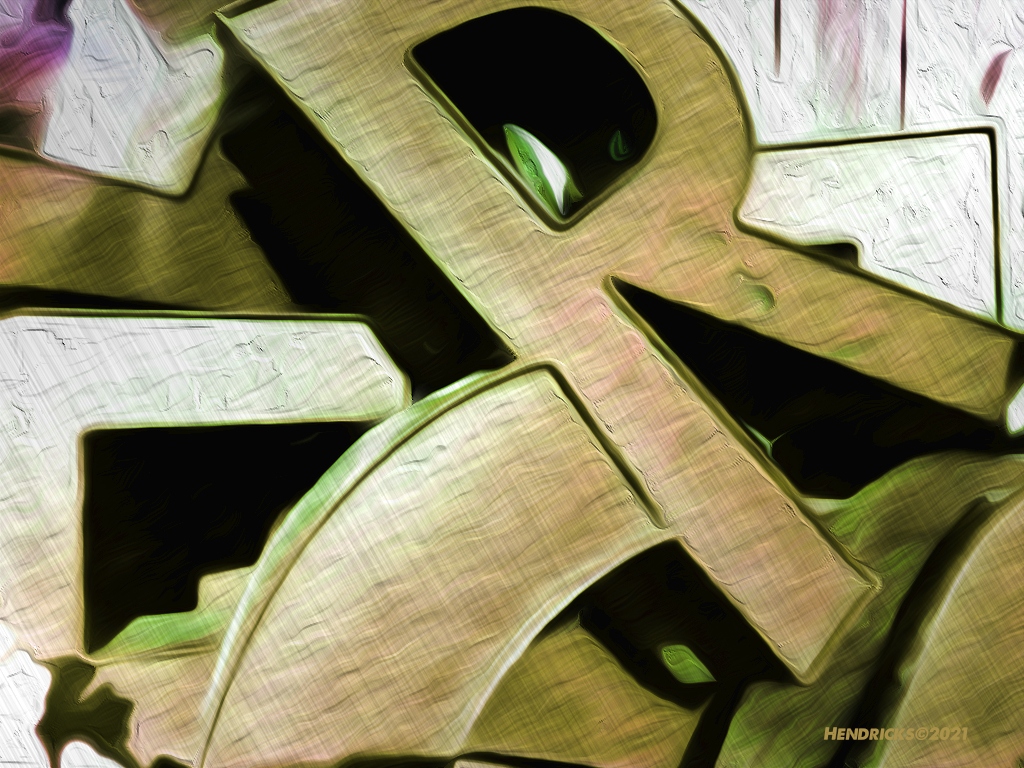
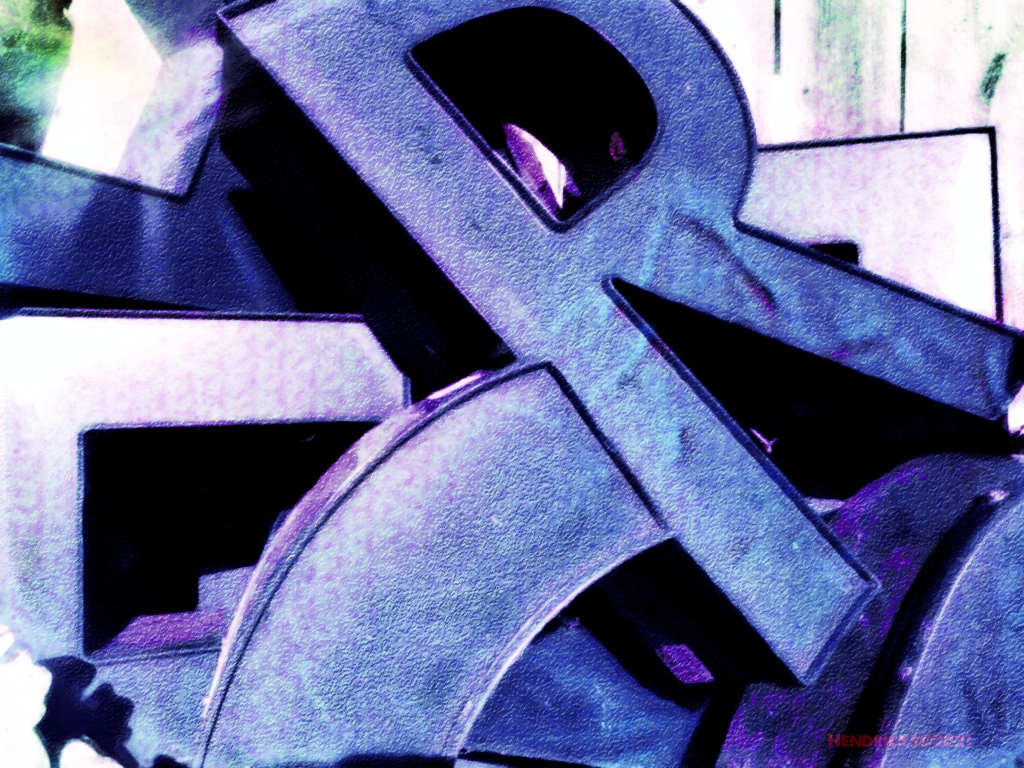
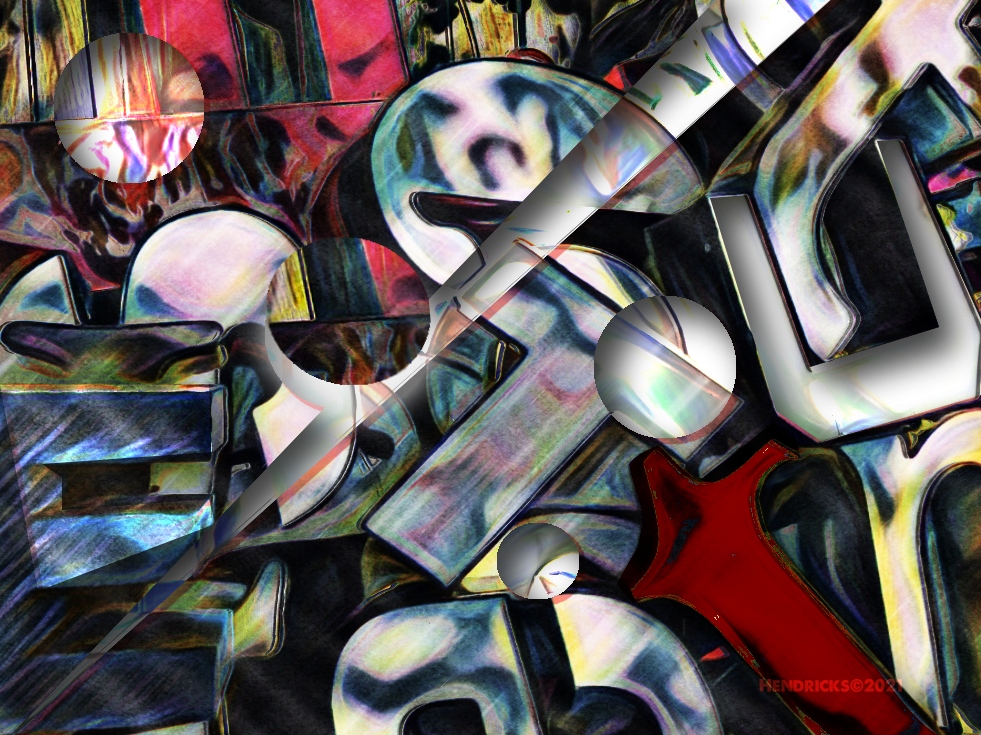
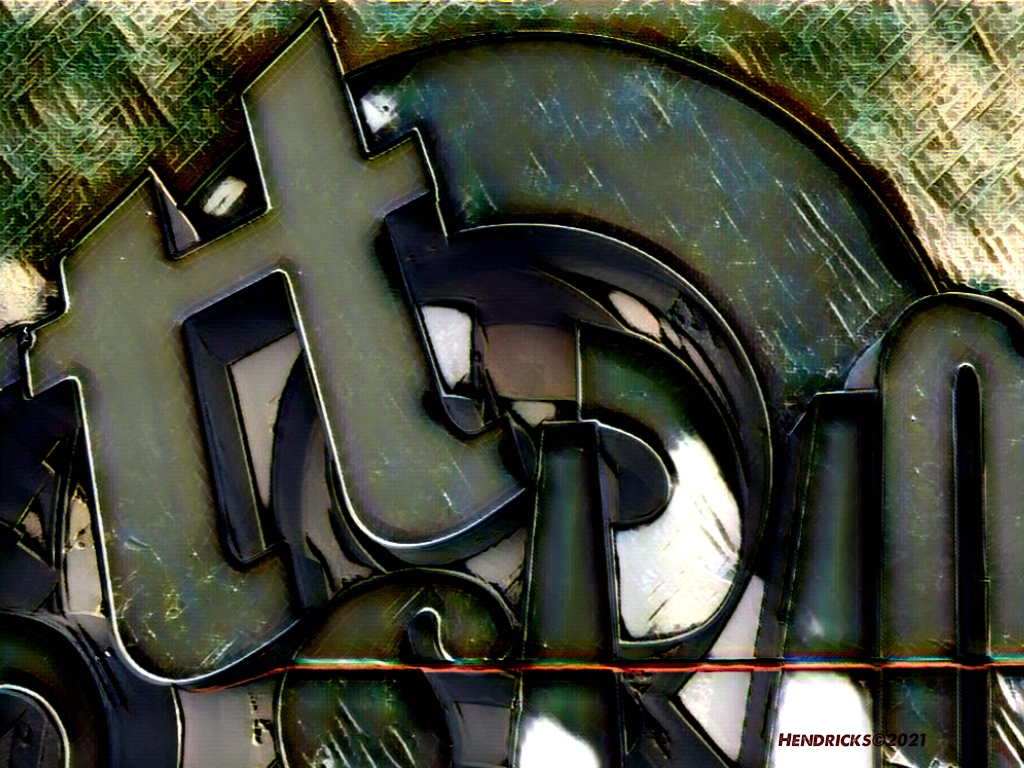
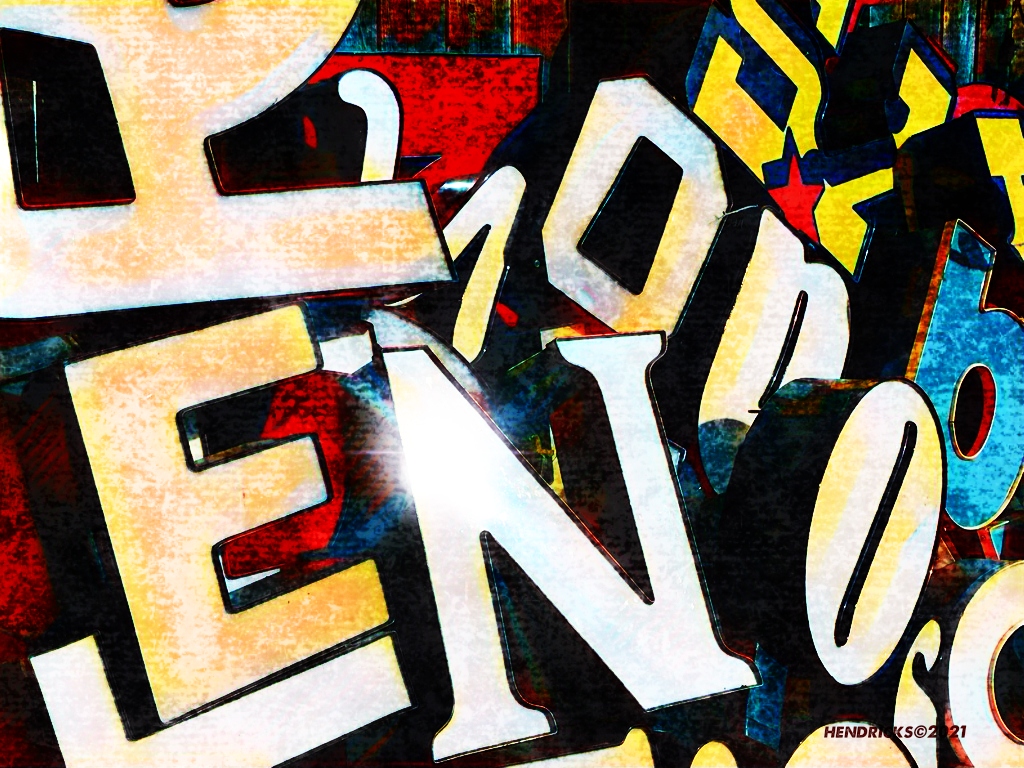
From the series Words I Cannot Spell by Bill Hendricks. A photographic image of scattered and layered letterforms exploring dyslexia, language, and visual perception.

From the suite of images by Bill Hendricks, Words That I Cannot Spell.

Dyslexia is not a disability – it’s a gift. It means that I, and many other dyslexic thinkers can portray the world through images because we think in images. I can build worlds, freeze the frame, walk around and touch. I can read people’s faces, drawings, buildings, landscapes and all things in the visual world more quickly than many of my non-dyslexic friends. I paint with words; they are my colours.

~ Sally Gardner (Davis Dyslexia Association International)

Growing up, I had no idea why I had such a hard time reading and comprehending what I read. In my day, elementary school classes divided readers into groups: good, so-so, and poor. I always wanted to be in the good readers group, but I consistently found myself in the poor group with another student assigned as our tutor. I never understood why reading the things I wanted to read felt so difficult.

It was not until I joined the USAF that I discovered I was dyslexic. Reading is still a struggle, but like Sally Gardner, I believe dyslexia also allows many of us to experience the world differently. Personally, I think dyslexia contributed to my ability to express myself through art and other creative problem-solving endeavors.

I included Sally Gardner’s poem, Disobeys Me, with my suite of images titled Words That I Cannot Spell, because it speaks to an experience many people with dyslexia understand deeply.

I also want to thank Hunt and Gather Antiques for allowing me to photograph the incredible collection of letters in their backlot.


Second Life Endowment for the Arts — Tap Quentin‘s Grant Project

Second Life is an online multimedia platform that allows people to create an avatar for themselves and then interact with other users and user-created content within a multiplayer online virtual world. Developed and owned by the San Francisco–based firm Linden Lab and launched on June 23, 2003.  ~https://en.wikipedia.org/wiki/Second_Life

This is an image taken from the sky of my 64 meters SLEA Project
SLEA-Thank you
The labyrinthine I am creating in Second Life (SL)
Thank you, SLEA

Second Life 1/4 sim Grant–The property looking down at it. Mostly I am focused on shapes. I do appreciate the texture and color of my neighbors. I have an unexpected surprise I have two missiles flying over the property. #Shadowmason,_Tap_Quentin,_Second_Life